My oh my! Makore

Hey Folks,

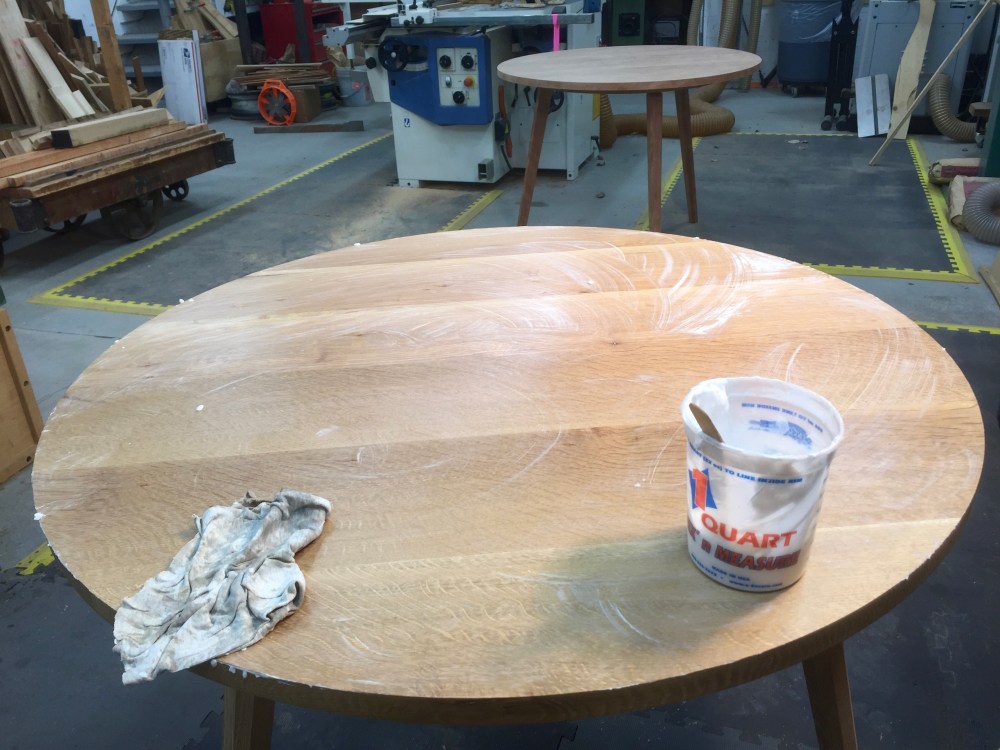
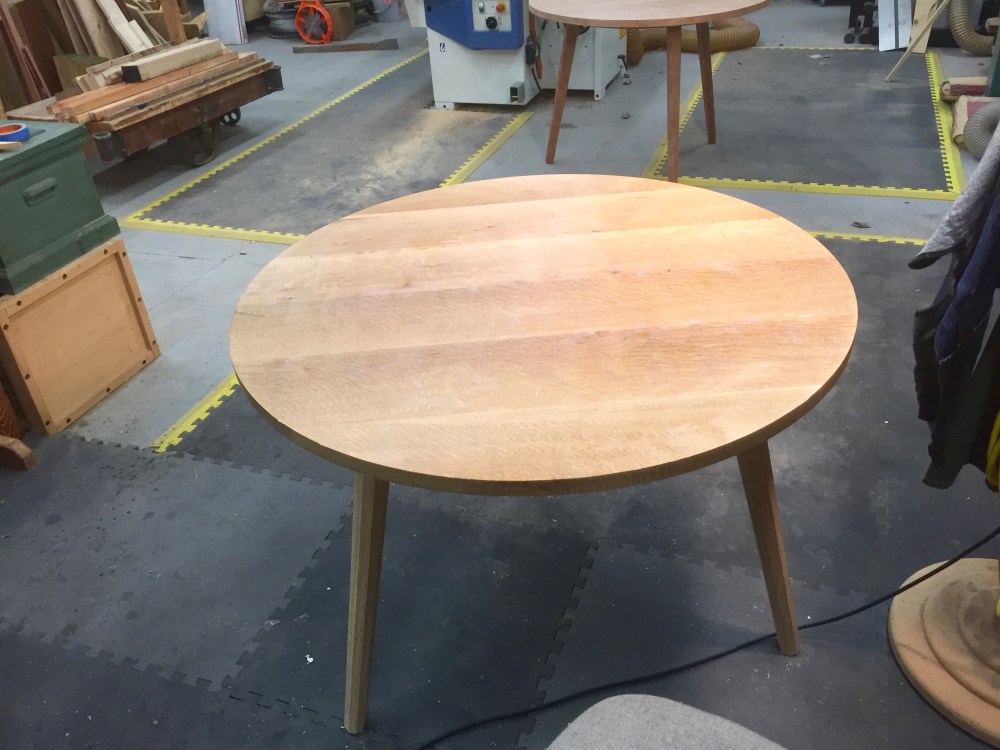
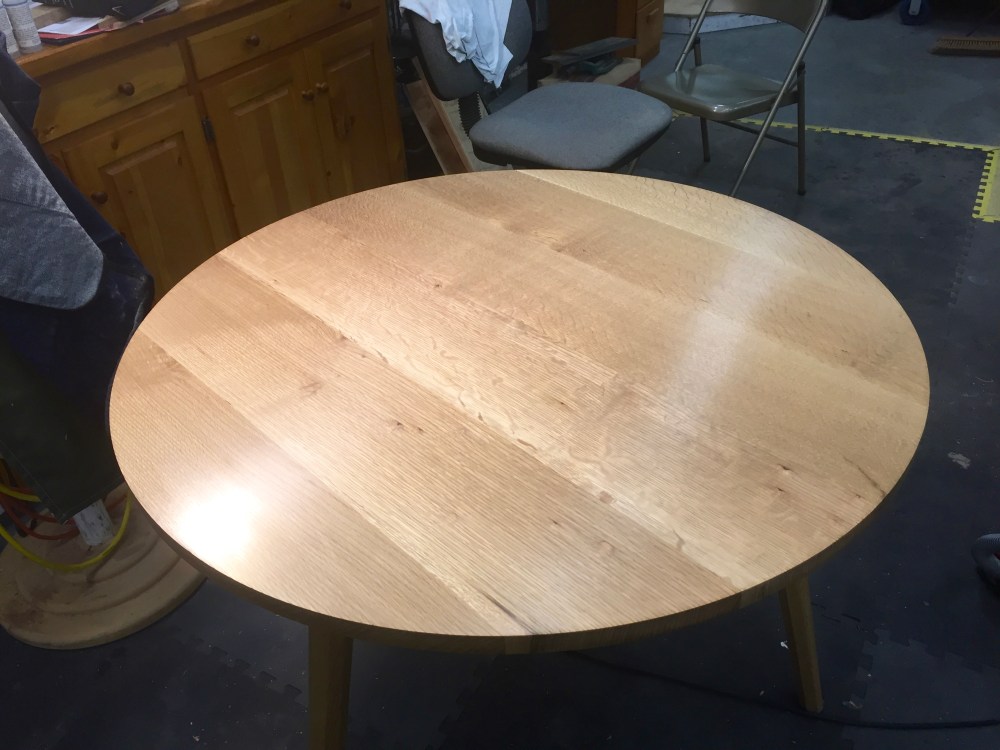
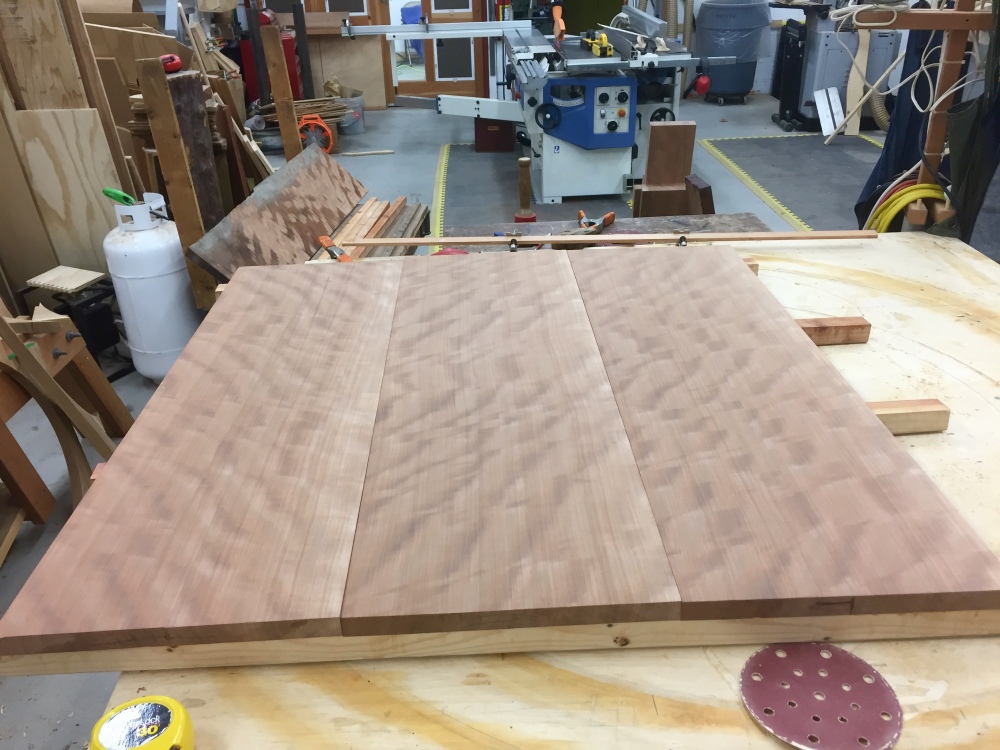
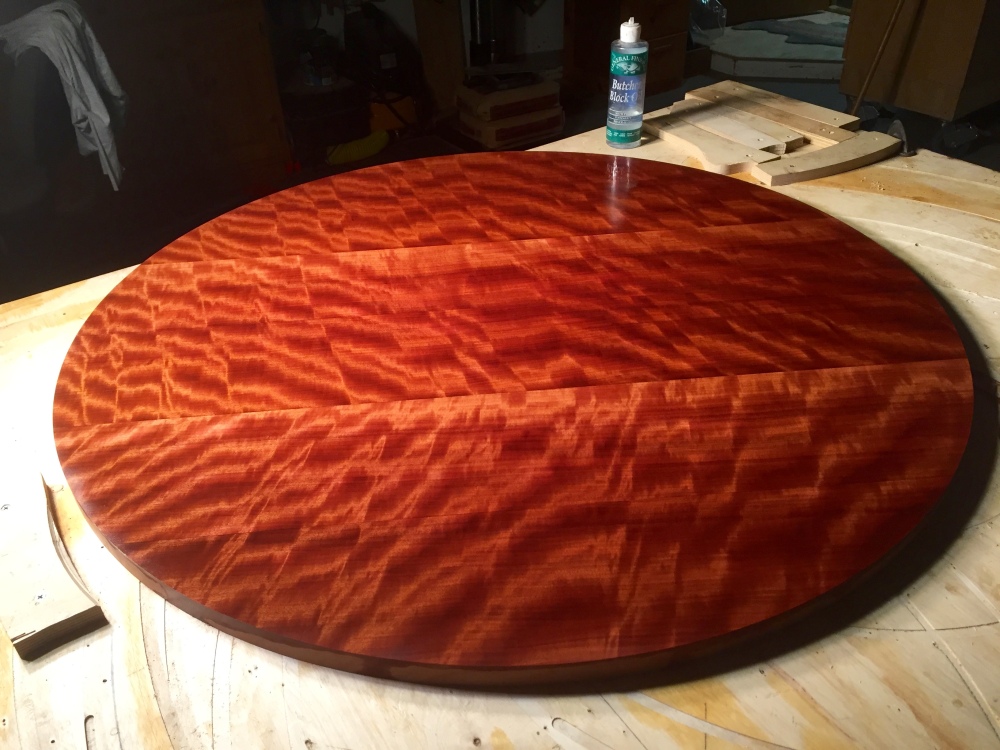
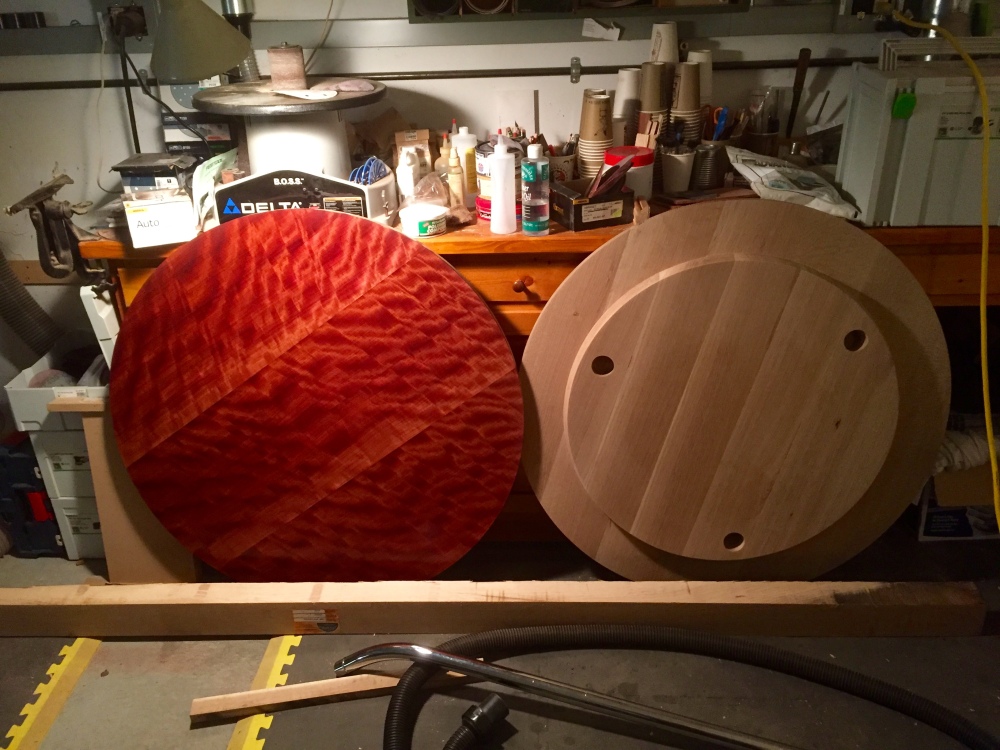
A couple of days ago, I glued up the top for the second of two staked leg tables.  Unlike the first, which was made of white oak, this one is of African makore.  The makore is very similar to mahogany, in color, texture, and weight.

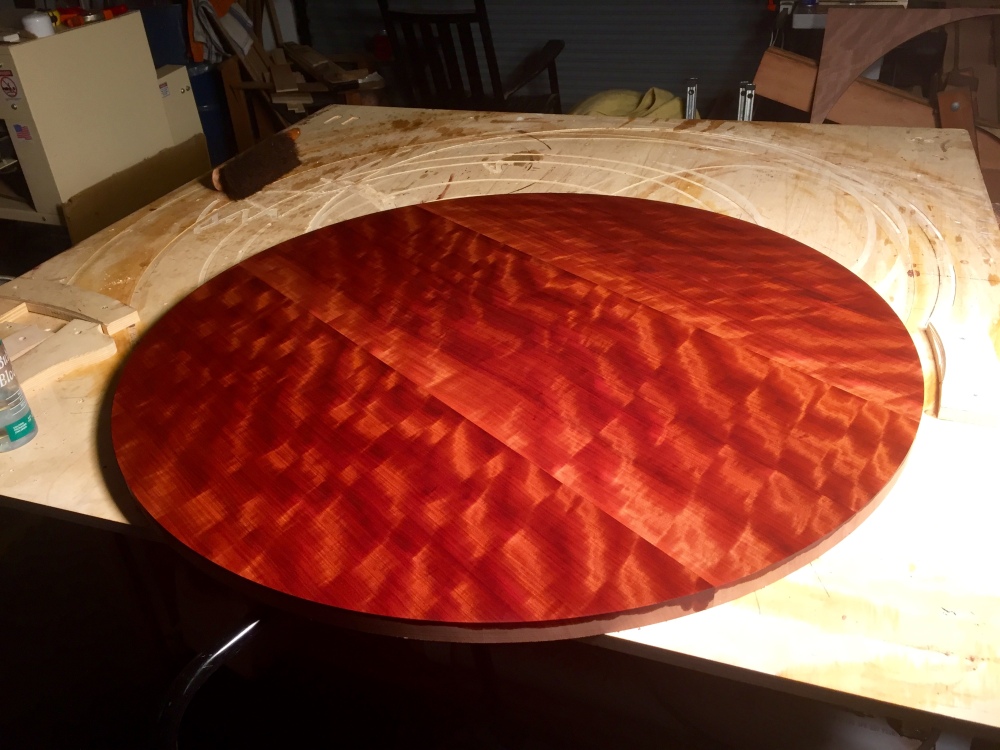
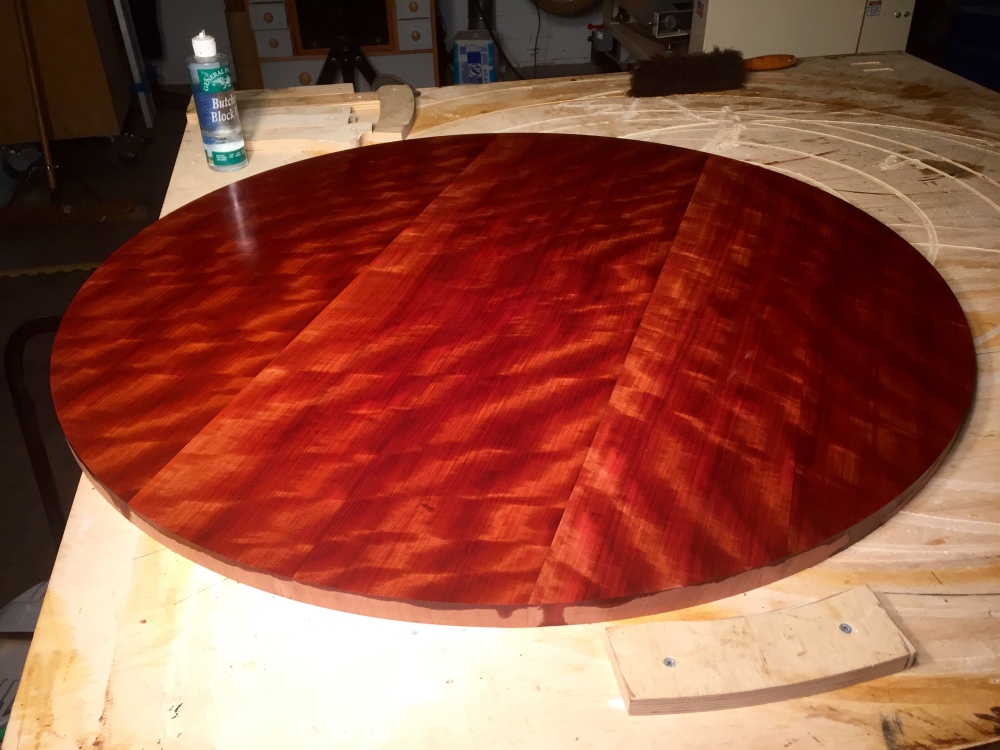
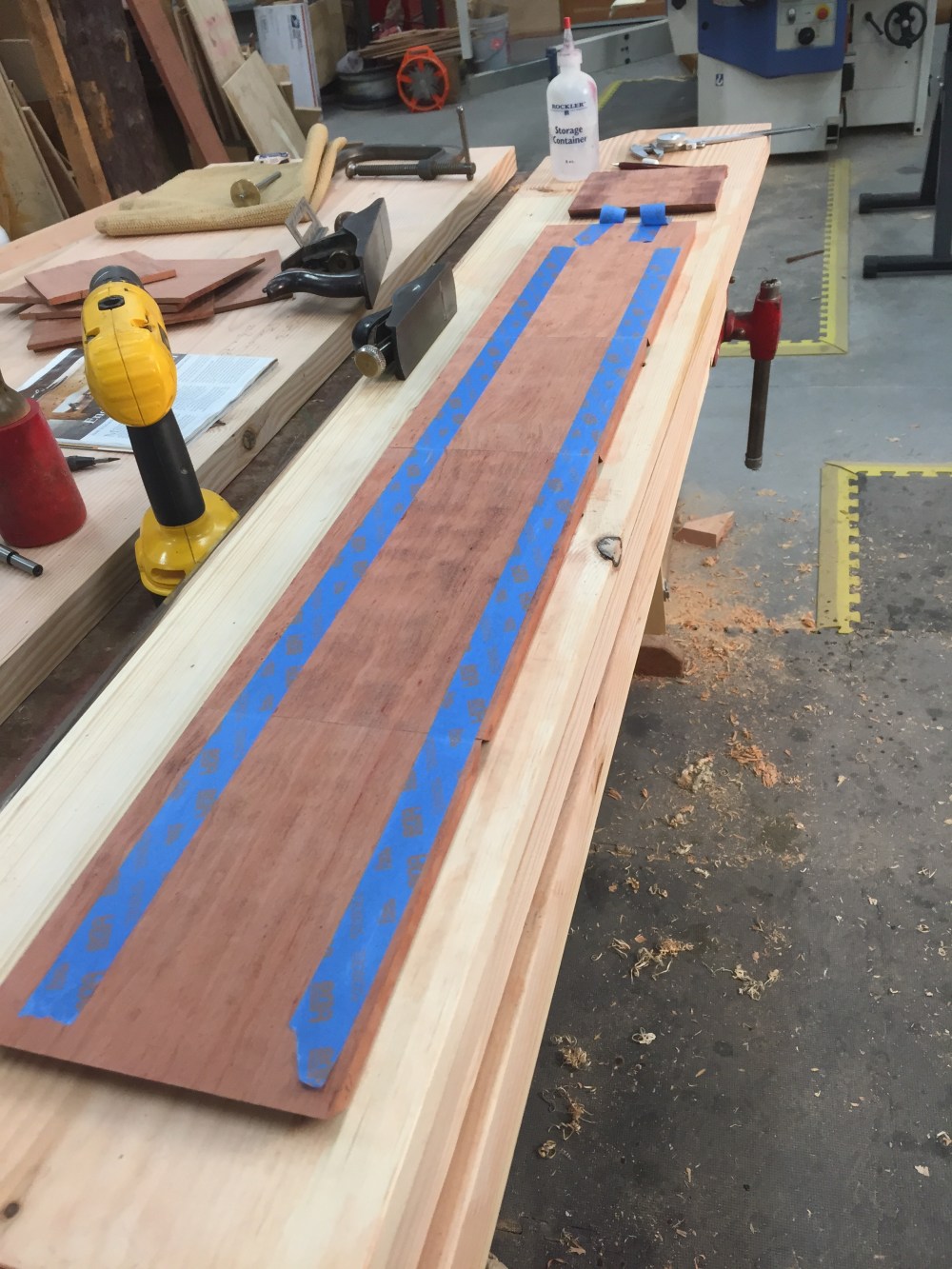
This particular board was nine feet long and 15″ wide.  What is most remarkable though is the chatoyance of waterfall figure.  There was some hint of it once it was rough planed.  But after I cut it out and sanded it to 100 grit, I poured some mineral spirits on it and that’s when the magic happened.

IMG_1844IMG_1846IMG_1847IMG_1848IMG_1849

It just keeps getting better. 🙂

Cheers,
Tom

Back to the Box

Hey Folks,

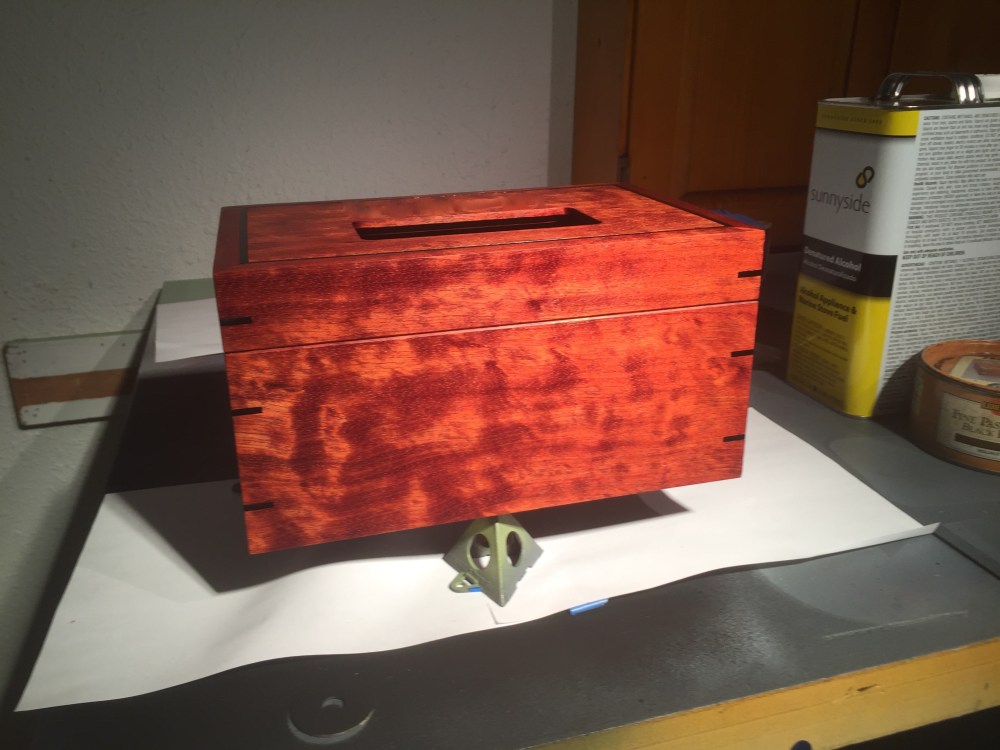
So, the commission that I recently completed was a presentation gift box made to specifications provided by my client.  The box was made of some african bubbinga that I had saved in the shop.  The bubbinga has a wonderful chatoyance, and takes a finish well.

IMG_1814

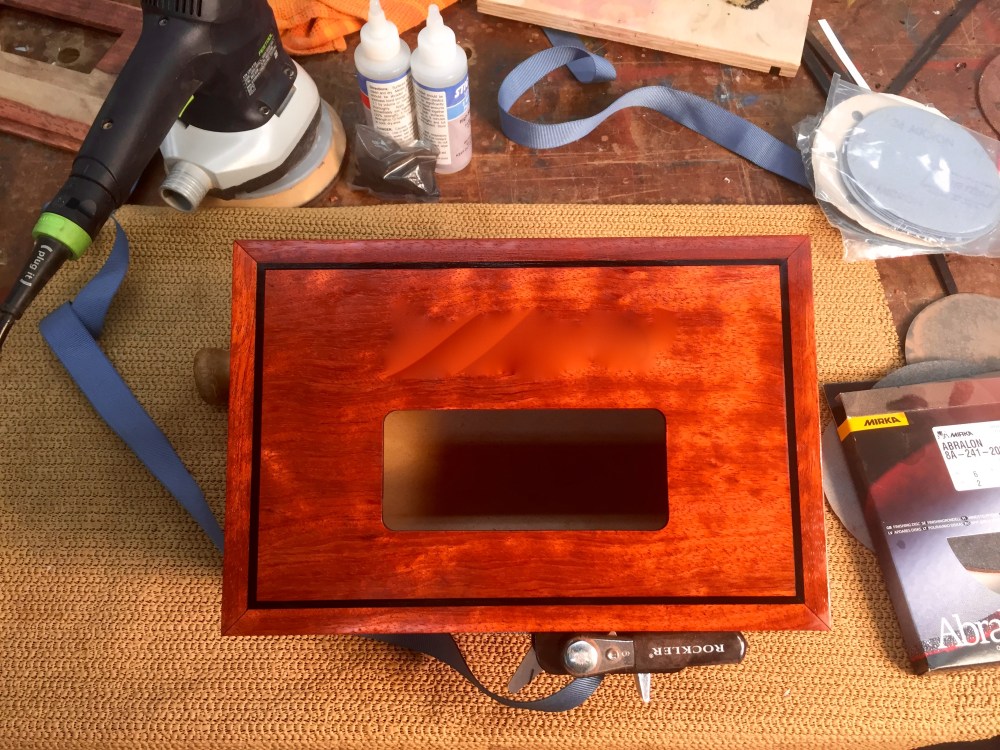
I constructed the box as I do nearly all small boxes, as a mitered box with a telescopic lid.  I used some gabon ebony splines and a glued in, dimensionally stable plywood bottom, to strengthen the corners.

IMG_1806

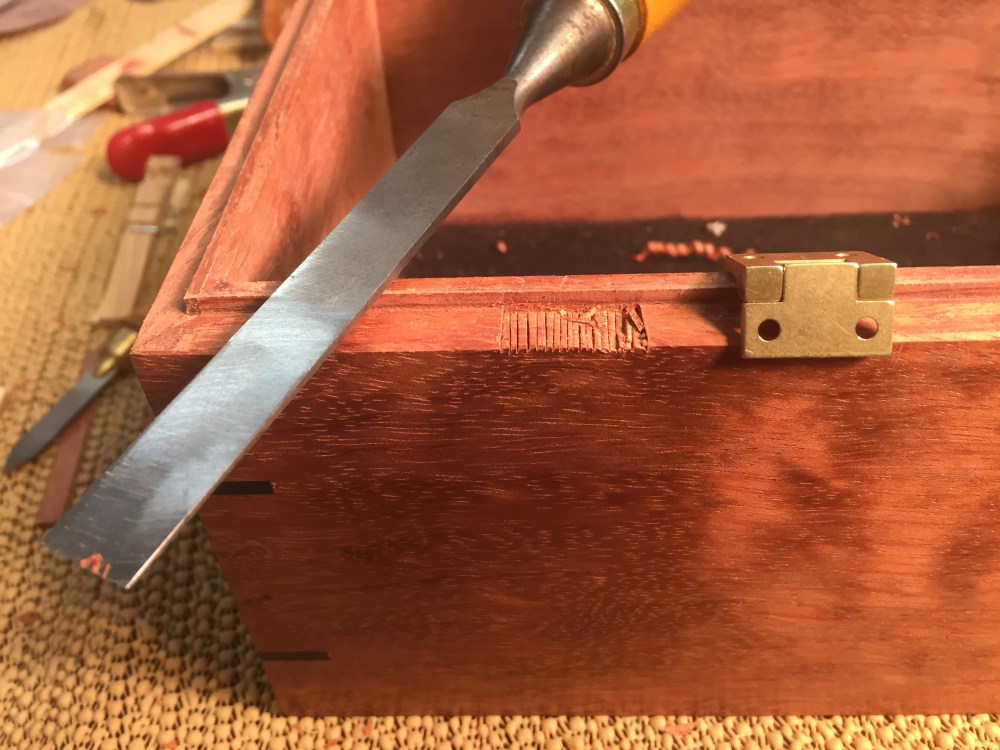
Since the client specified a stopped hinge lid, some additional adjustments were needed to the dust seal lip on the box.  The finish was six coats of wipe on polyurethane.

IMG_1809

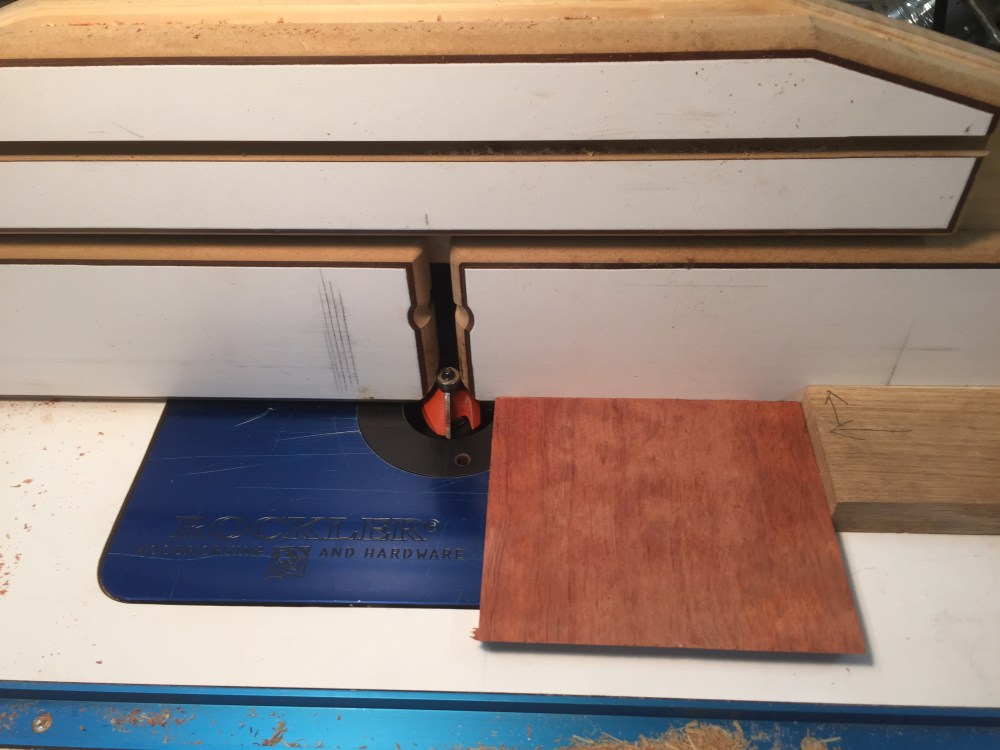
To make a mitered box, I cut the parts to length and width and miter the ends with a 45º router bit on the router table.  The top and bottom of each side piece is rabbeted with the router as well.

IMG_1736

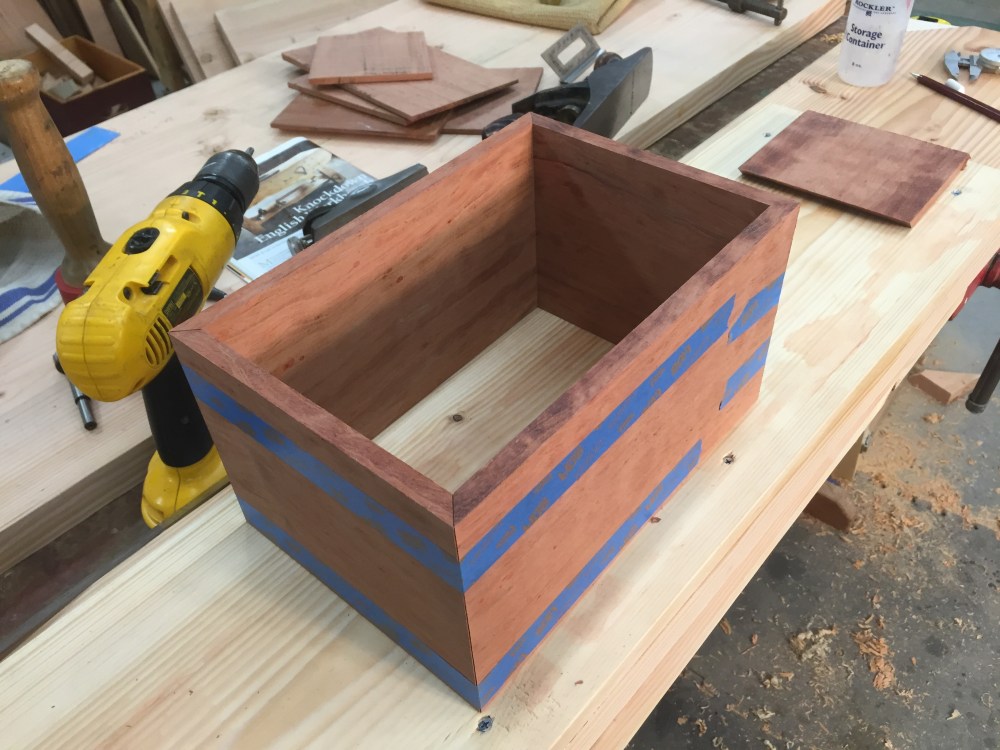
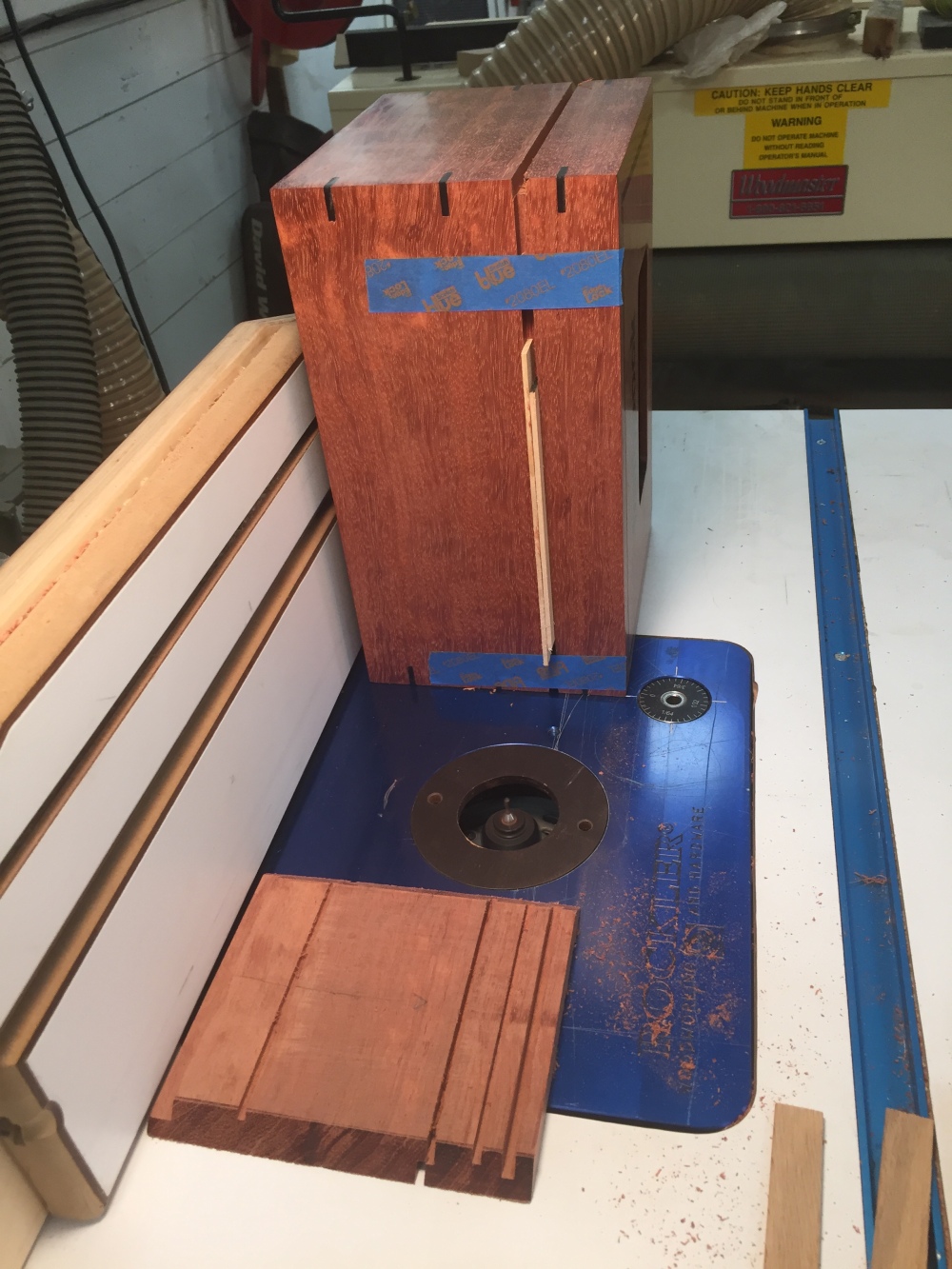
The trick to making an airtight telescoping lid is to make an extra side piece as an index.  A dado for the lid joint is made on the inside surface of each piece, and the index.  When it comes time to separate the top from the box, the index locates the dado hidden on the inside.  A similar dado on the outside, offset to just intersect the corner of the inside dado, releases the lid and forms the telescopic joint.  Some shims keep the lid in place once the ends are cut free.

IMG_1737IMG_1740IMG_1808

It’s all much easier than it sounds, and makes an impressive  juncture between box and lid.  This project has reminded me of how much I enjoy making small boxes, so you might see a few more here before Christmas rolls around. 😉

Cheers,
Tom


Jumping ahead

Hey Folks,

Although I’m still finishing up my latest commission, I have started on my next project, a pair of staked-leg tables from Christopher Schwarz’s, Anarchist’s Design Book.  I’m making the first one out of white oak, and the second out of African makore.

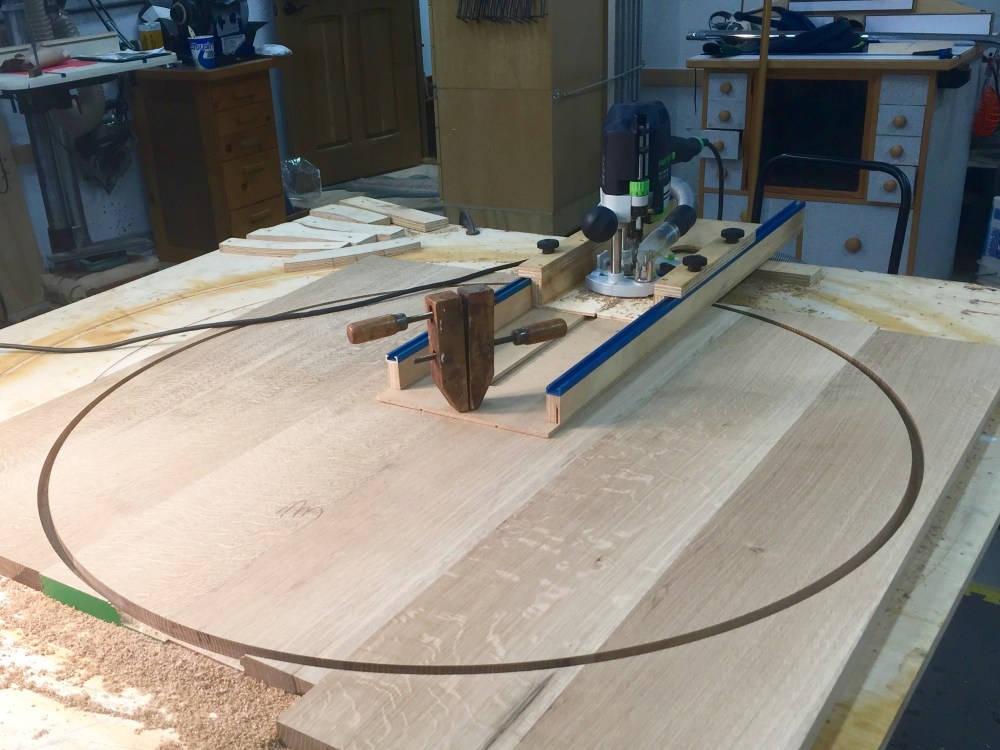
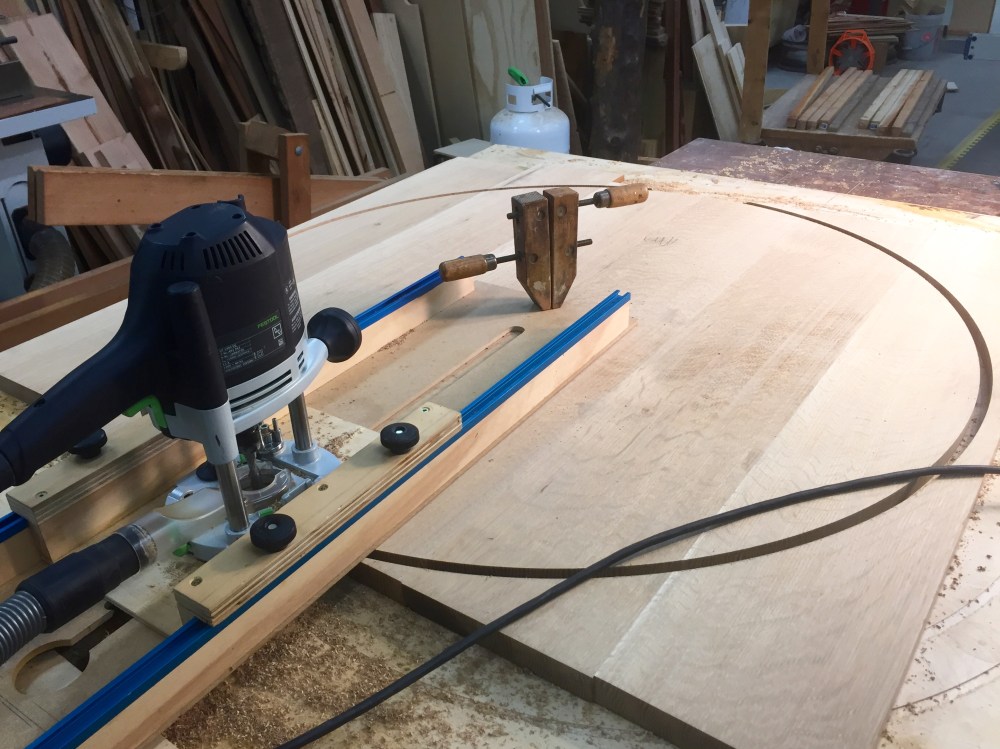
Although Chris likes to use a bandsaw to cut his round table tops out, I prefer a router on a trammel.  Here is the first top being cut out.

IMG_1822IMG_1824

This first table will be finished with a Scandinavian soap finish, which will be a first for me.  Wish me luck.

More later,
Tom

Clothes pins into “close pins”

Hey Folks,

I’ve been diligently working on my latest commission, and while using a technique borrowed from my younger days as a model aircraft enthusiast, it occurred to me that many of you might like to know of it.

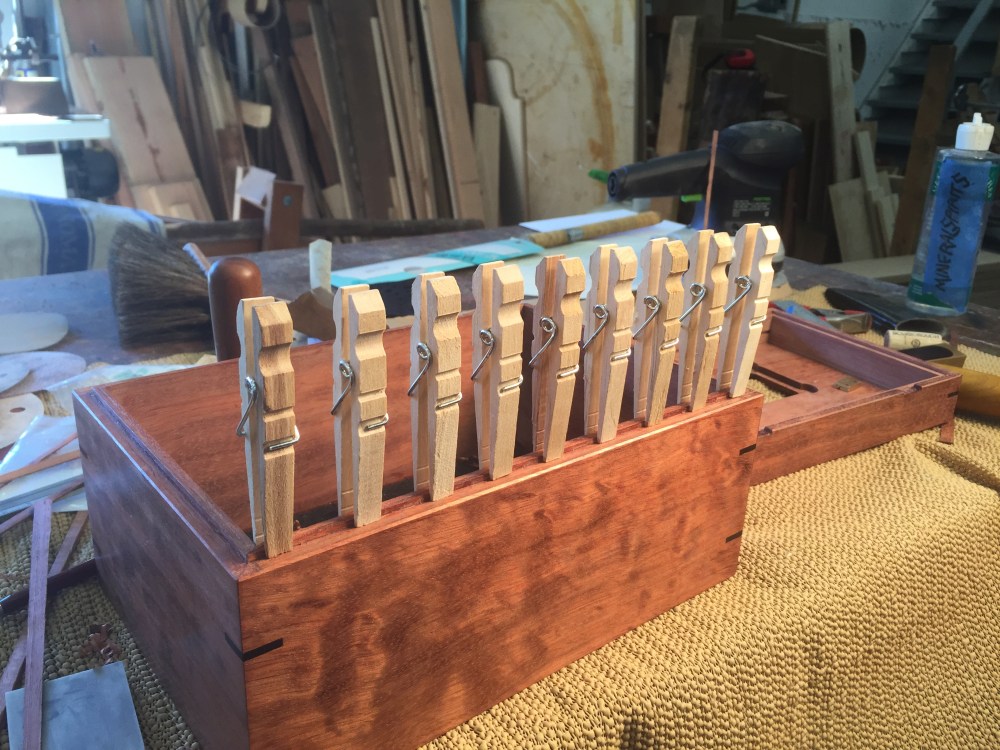
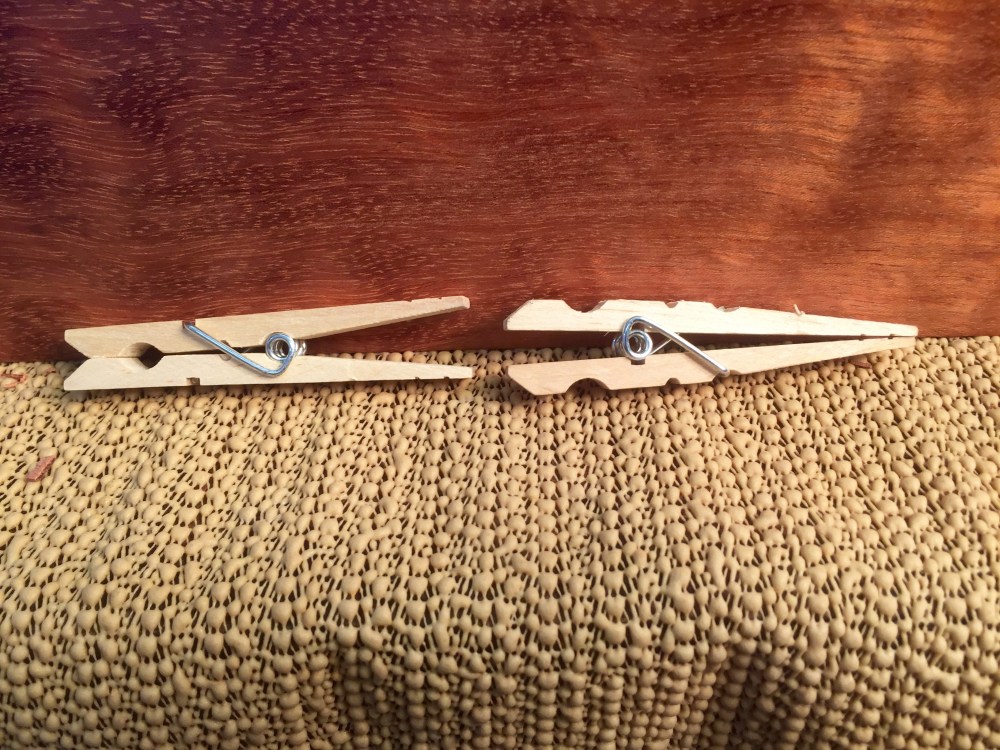
Most anyone who needs a small spring clamp knows that an ordinary clothes pin will work in most cases.  But there are even more times when a clothes pin won’t reach into a narrow space or up to a fine edge.  This is where a clothes pin morphed into a “close pin” will do the job.

IMG_1810

A closer look shows how a clothes pin differs from a close pin.

IMG_1811

Aircraft modelers are not the only folks who routinely use close pins.  Luthiers also use them to clamp the kerf strips that join the bodies of their instrumental creations.

Remember, you can never have too many clamps. 😉

Cheers,
Tom


On Commission

Hey Folks,

Sorry for the radio silence of late, I am currently working on a commissioned project so you’ll just have to wait until it’s completed.  I promise a bunch of photos and some how-to insights as well.  As they say on TV,

“Your patience will be rewarded.”

Cheers,
Tom

One Stout Bench

Hey Folks,

I’ve always been a fan of workbench designs, any, and all of them.  They offer great insight into other methods of work; methods for doing essentially the same tasks in different ways.

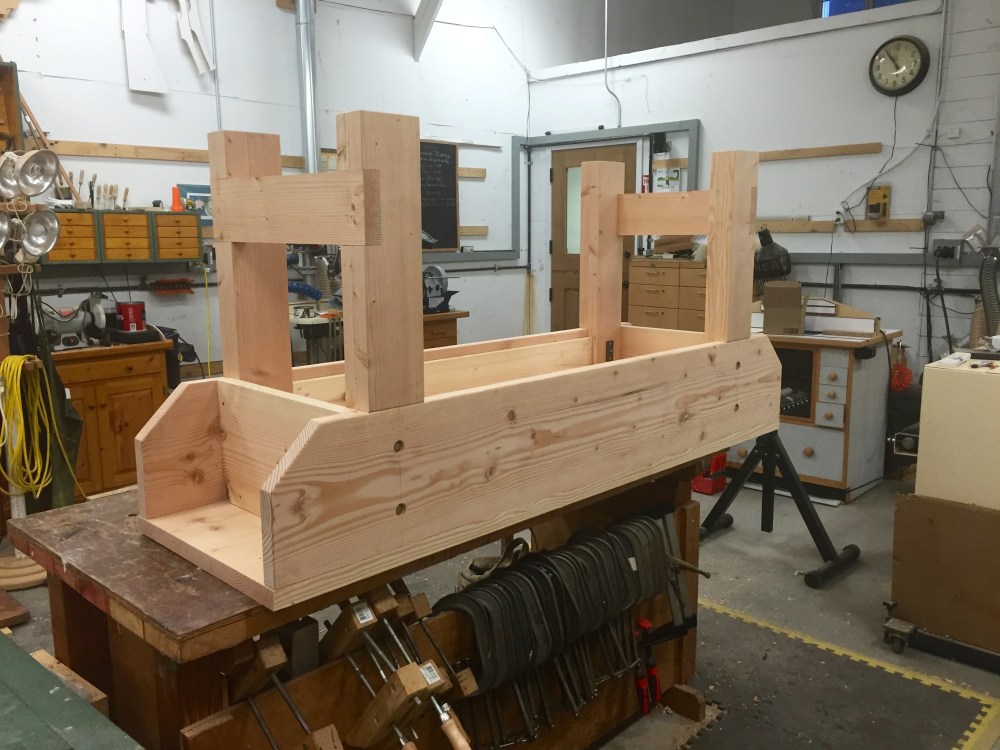
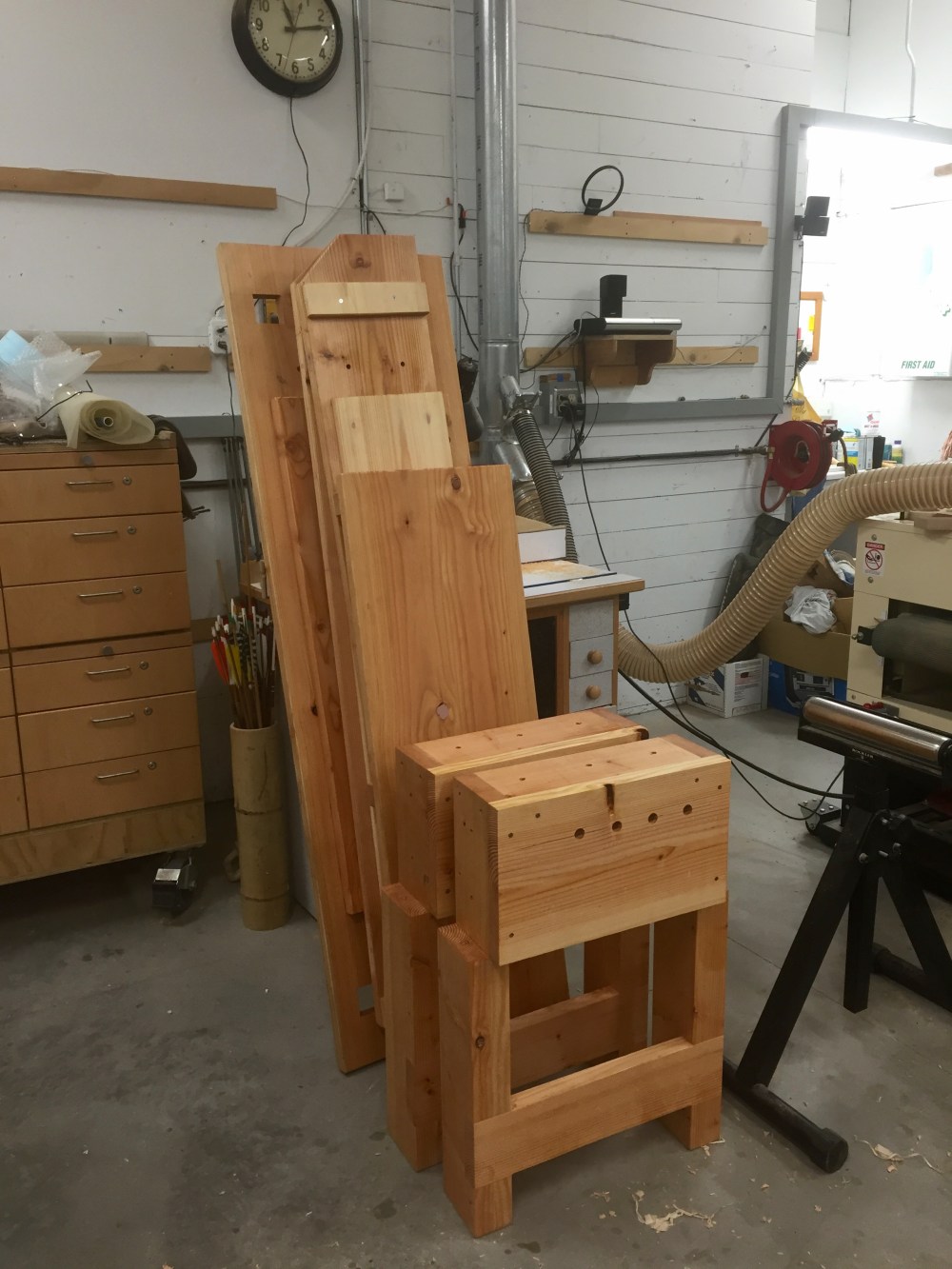
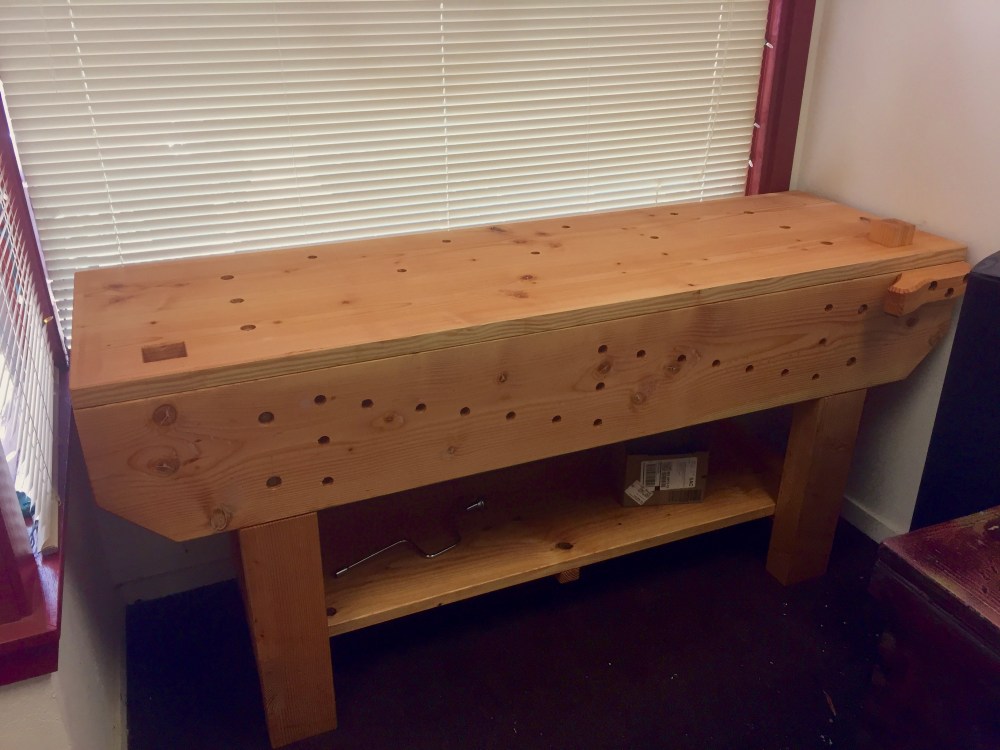
One of the more intriguing benches is the Nicholson design, originating in 17th century England.  This bench is designed for use with traditional western hand tools, and holdfasts instead of a  vise.  Christopher Schwarz, of Popular Woodworking Magazine, modified a relatively recent version of the bench and made it an easily knocked down bench that can be moved and assembled by one person without assistance.  The remarkable feature of the bench is that in addition to all the above, it is one stout puppy.  In fact, it’s damned near immovable once assembled, rock solid, period.

IMG_1749IMG_1773

Chris made his bench with locally available construction lumber, which for him is southern yellow pine.  Out here in the Great Pacific Northwest, it’s Douglas fir.  The bench fits perfectly in the south window of my shop’s front room, and will make a good demonstration station, …until it’s sold of course. 🙂

IMG_1778

Cheers,
Tom

Ps. If something looks a little backwards to you, it’s because the bench is set up for a left handed woodworker (me).  It can easily be set up either way.

There’s nothing better…

Than a satisfied customer.  I really enjoy it when someone gets excited about my work. IMG_1653I sold the two Roorkhee chairs yesterday to this charming young lady, her dad, and her very large, and very friendly great dane.  Peggy Tzu sought refuge from the playful pouncing of the great dane where she could, and our young friend enjoyed having a lap dog for a while.
These chairs have been the source of a number interesting visitors, including a lady with a generations old Roorkhee chair of her mother’s that needed repair, and a gentleman who’s father worked for Kaare Klint and has a couple of his “Safari” chairs in the basement.

I purchased leather for more chairs today.  Who knows what story might come through the door for them?

Cheers,
Tom

A Trip to the Land of Lumber

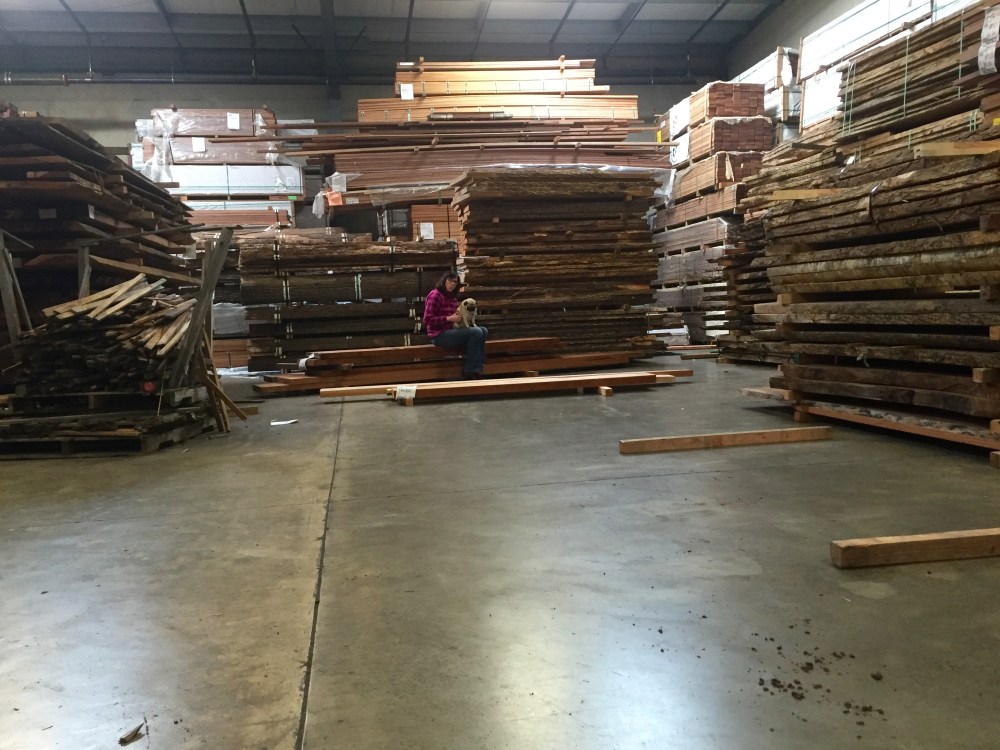
And that would be Edensaw Hardwoods in Port Townsend, Washington.  Port Townsend is about an hour and a half drive and ferry ride to the Olympic Peninsula, northwest of Seattle.  It’s a picturesque part of the state, and a pleasant enough trip so Kris and Peggy Tzu decided to join me.

IMG_1728

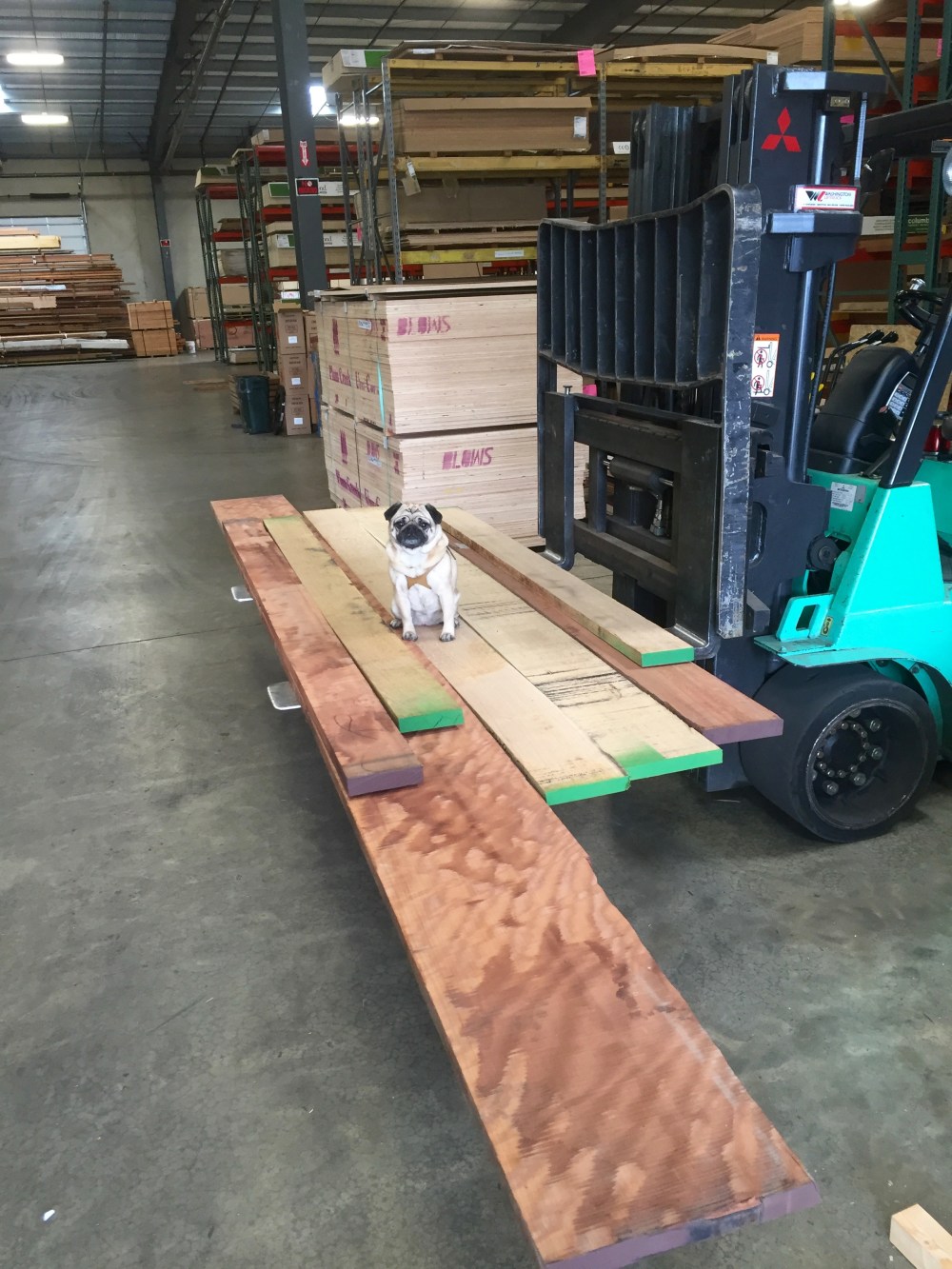
The variety and selection of domestic and exotic hardwood there is truly staggering.  Because Port Townsend is an entry port about 12 miles from the Pacific Ocean, the selection of exotic species is usually better than that of domestic woods, and the prices are usually comparable, if not better.  Today, we bought wood for two identical tables from Christopher Schwarz’ latest book, The Anarchist’s Design Book.  I decided to make one from quarter sawn white oak, and the other from African makore.  Makore is similar in color and texture to mahogany, and Edensaw has a selection with beautiful waterfall figure.

IMG_1731

The lumber gets delivered on Monday, but I have another couple of projects that I need to complete first, so I’ll cut it all to rough dimensions and let its moisture content equilibrate to that of my shop for a week or so before I get started.

Stay tuned,
Tom

IMG_1726

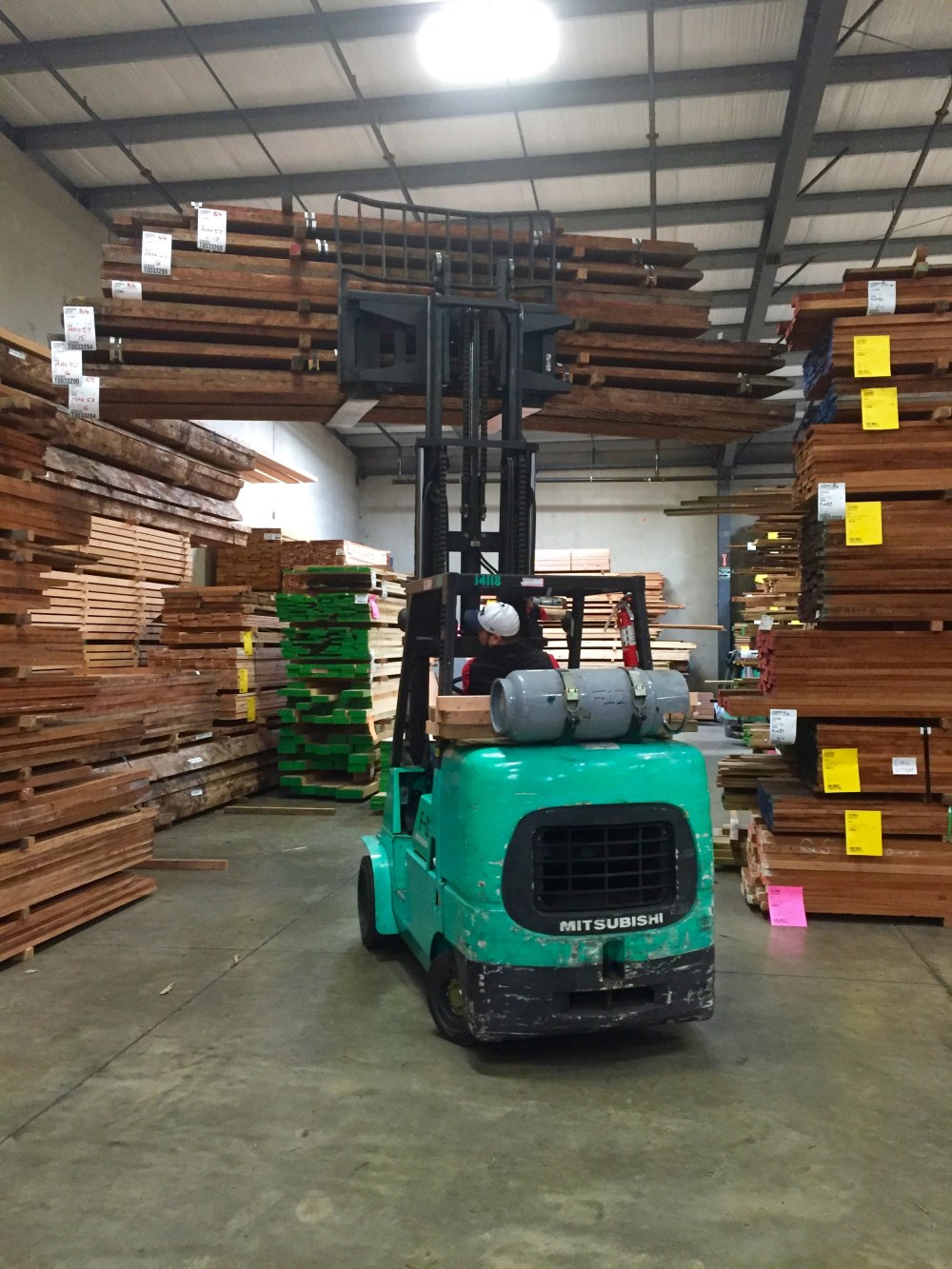
Ps.  The forklift drivers in their warehouse have to be the most skilled of any I have ever met.  This guy danced this load of well over a ton of wood, valued at thousands of dollars, around the floor with less than an inch to spare on either end, and more than twelve feet up in the air.  I stopped breathing there, for a just a moment or two.

One (actually six) for the shop

Hey Folks,

Occasionally, I like to do a project for the shop, instead of from the shop.  This one is for the shop.

If you’ve followed this blog, you know that I heat the front room of the shop with a wood burning stove.  All that firewood is trucked into the shop via cardboard boxes and a hand truck .  I’ve never liked the cardboard boxes, they’re shabby, and not befitting a wood shop.

IMG_1685

So, I decided to make some wooden boxes to carry firewood, and catch offcuts.  In the process, I thought of something else that the boxes could replace… the ubiquitous five gallon plastic bucket.  Everyone has, at sometime,  used an up turned five gallon bucket as an erstwhile step stool.  The trouble is, they’re not that stable, and often not tall enough.  I designed the boxes to socket together using a pair of bottom cleats.  That way, the boxes could be stacked and safely moved or stepped upon.

I decided on finger holes instead of handles, so that the boxes could be turned on end.  They are sized just right to be used as saw benches, or shop stools.  The finish is just milk paint and orange shellac.

image
“Boxed Lunch”

Cheers,
Tom

Then there were three

IMG_1674

Hey Folks,

Who would have guessed, that since opening the shop for business a few months ago, I would quite suddenly find myself in the awkward situation of being able to sell my work faster than I can create it.  The two tabourets have sold, the child’s puzzle rocker sold, and the two Rhoorkee chairs have sold (more on that later).  Oh, and all the mice sold too.  So now, I am embarrassingly short of inventory, except for the privacy screen and Kris’ rocker which is a demonstrator, not for sale.  Yet, this doesn’t seem to dissuade my customers.

Given the rate at which items had left the shop, I therefore resolved to make multiples of everything until my inventory was back to a comfortable level.  Thus, I have made four new puzzle rockers.  They are waiting for some new child safe finishes to arrive, but today I sold one anyway.  I hope that I get to finish the remaining three before they sell.

Cheers,
Tom