Greene and Greene styled Privacy Screen

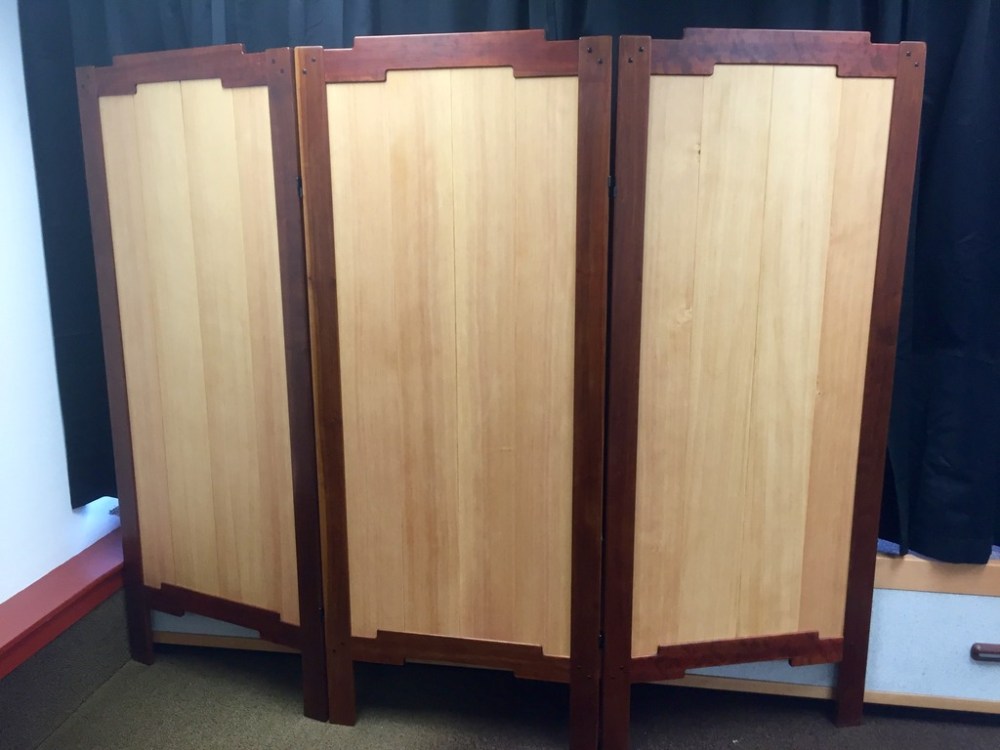
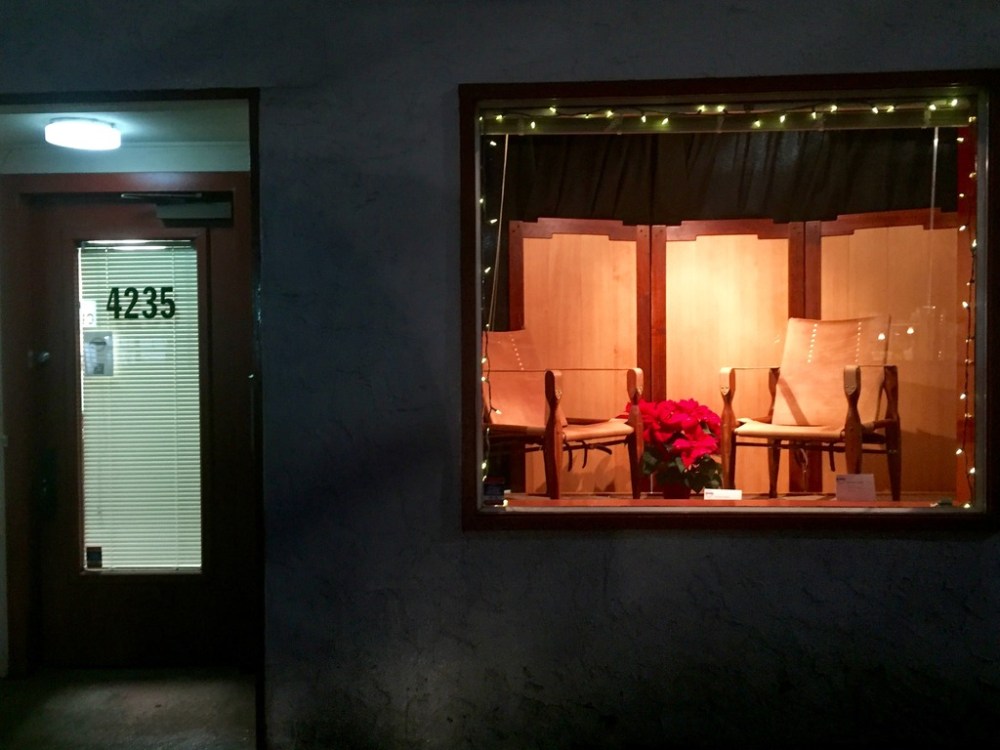
Well, it’s finally done, the privacy screen project came out better than expected.  It’s framed with lye washed cherry, the infill is douglas fir, and it’s accented with gaboon ebony plugs. There’s even a turquoise infill in a check at the bottom of one of the stiles.

img_1660

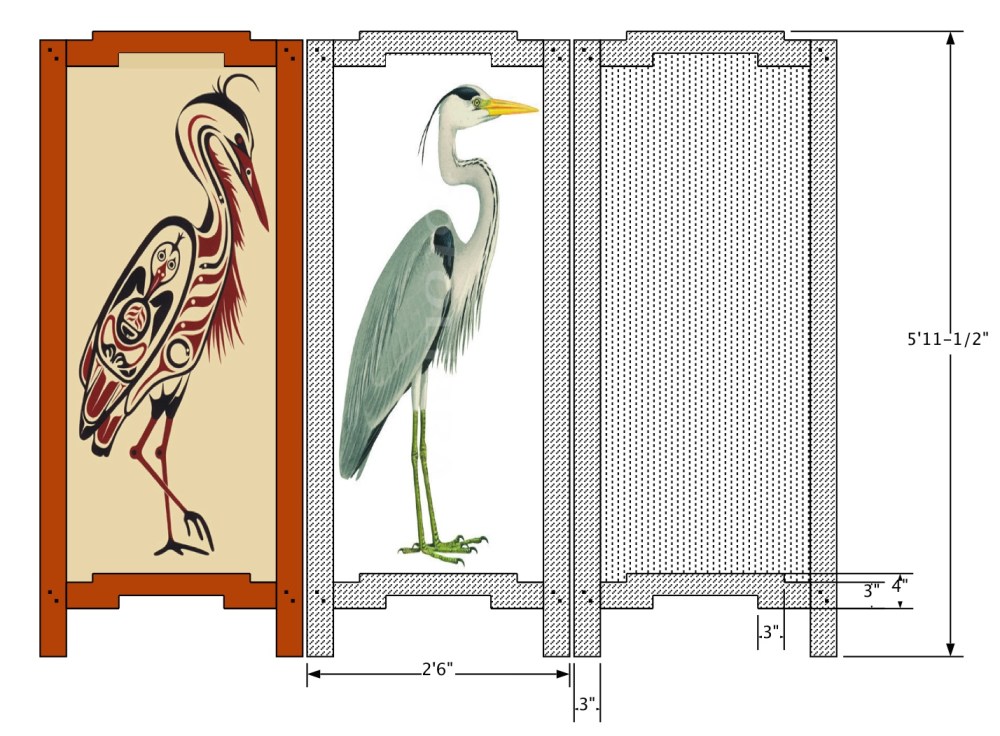
It’s 6′ tall, and tonight I discovered that it doesn’t fit in the display window because when I built the platform for the window, I measured for 6′, but forgot to allow for the carpet thickness. That’s not so bad, but when I went back to my original plan, I noticed that it said 5′ 11 1/2″. I’m sure that I said, “That’s dumb, why would I do that?”, and then proceeded to make it 6′ tall. 😕 🙄

img_1670

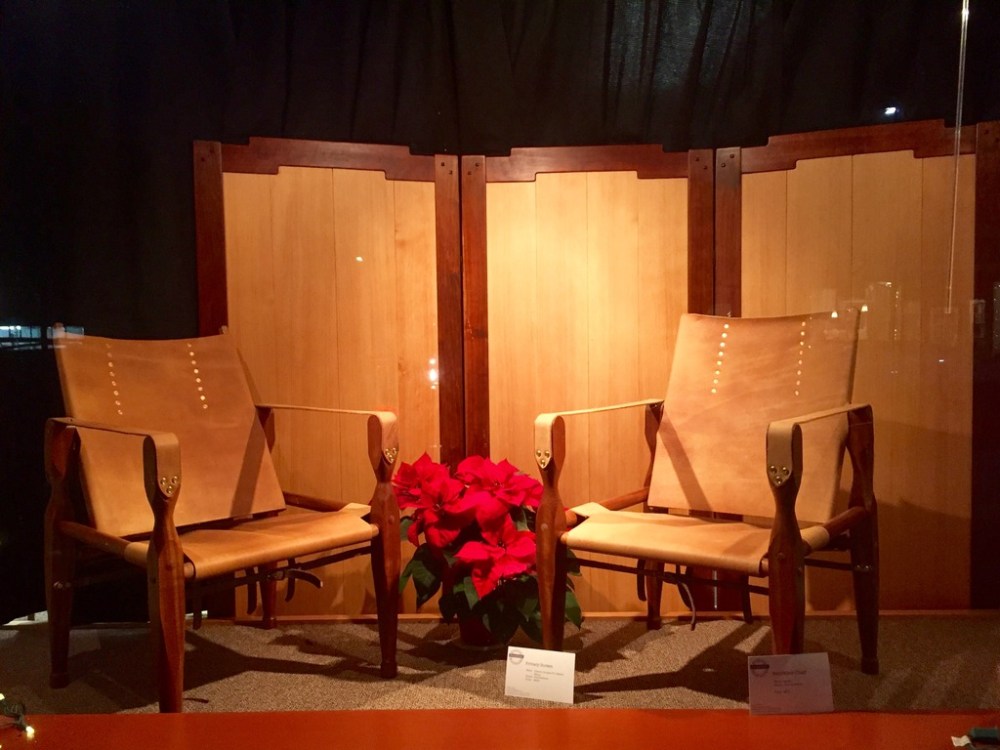
So, it sits behind the platform, but in front of the curtained backdrop. Kris thinks it works even better that way because it shows off the tops better. I’m just glad that it fits at all now.

img_1672

Cheers,
Tom


Black is beautiful

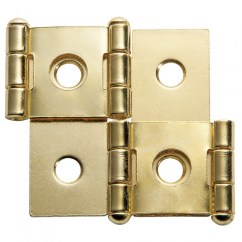
Although, in this case, not a cultural reference but the color of hinges.  I needed double acting hinges for the privacy screen project, but they only come in brass plated steel, which is not a good look for this project.
29033-03-1000

So I tried using liver of sulphur to patina the brass.  No luck.  For some reason, the plating didn’t tarnish like solid brass does. What I got instead, was a blotchy mess of various colors that looked like someone spilled something on them.

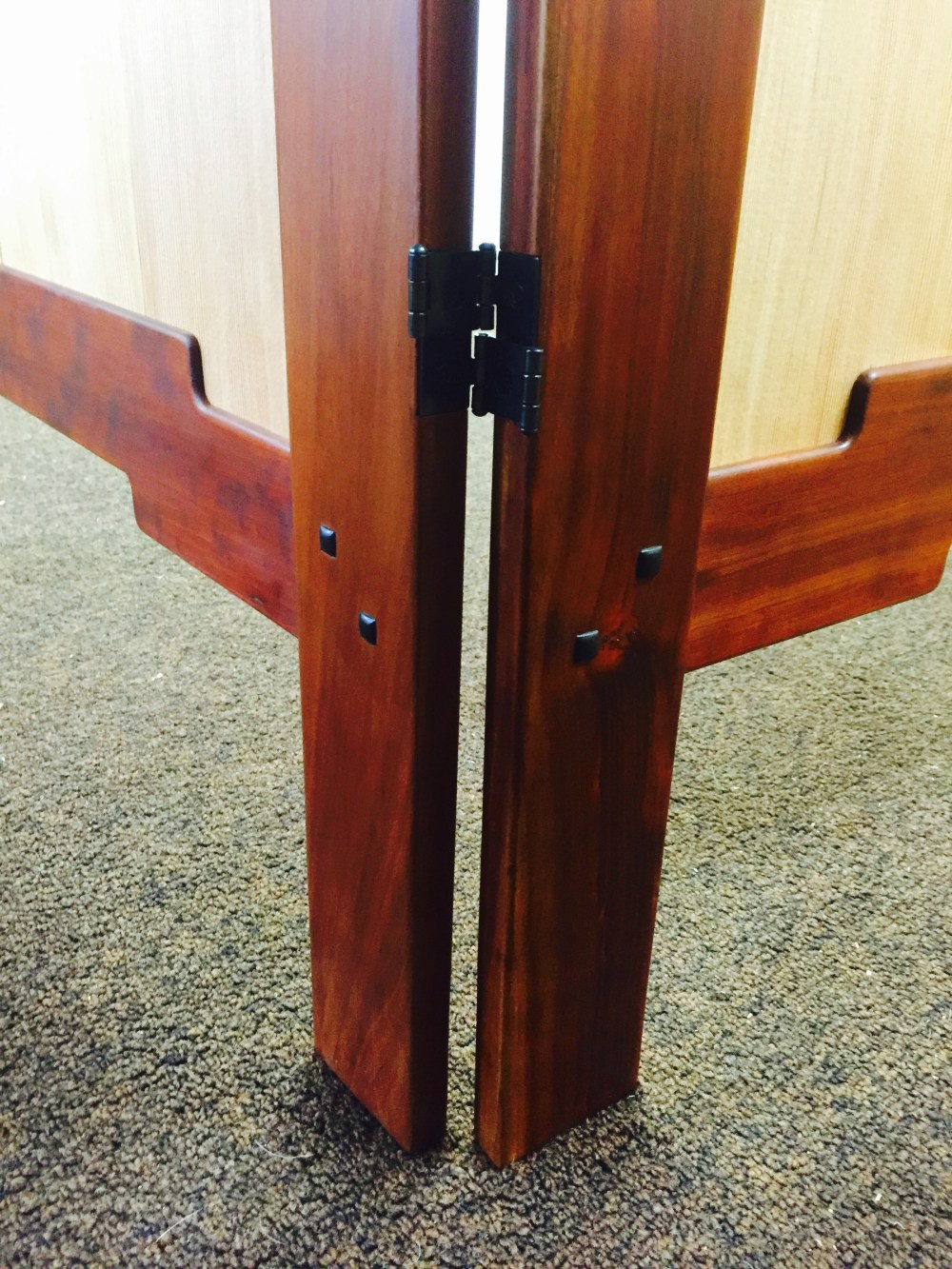
After a bit of pondering, I decided to try a gun blacking kit from Blue Wonder™.  It’s a four step process that removes the plating, bonds the colorant to the metal, and seals it.  After a day of working with smelly chemicals, hot metal and some 3M abrasive wool, the results were better than I could have hoped for.

IMG_1648

The deep, shiny black color nicely complements the ebony plugs.  The project is nearly finished.

Cheers,
Tom

Square Pegs…

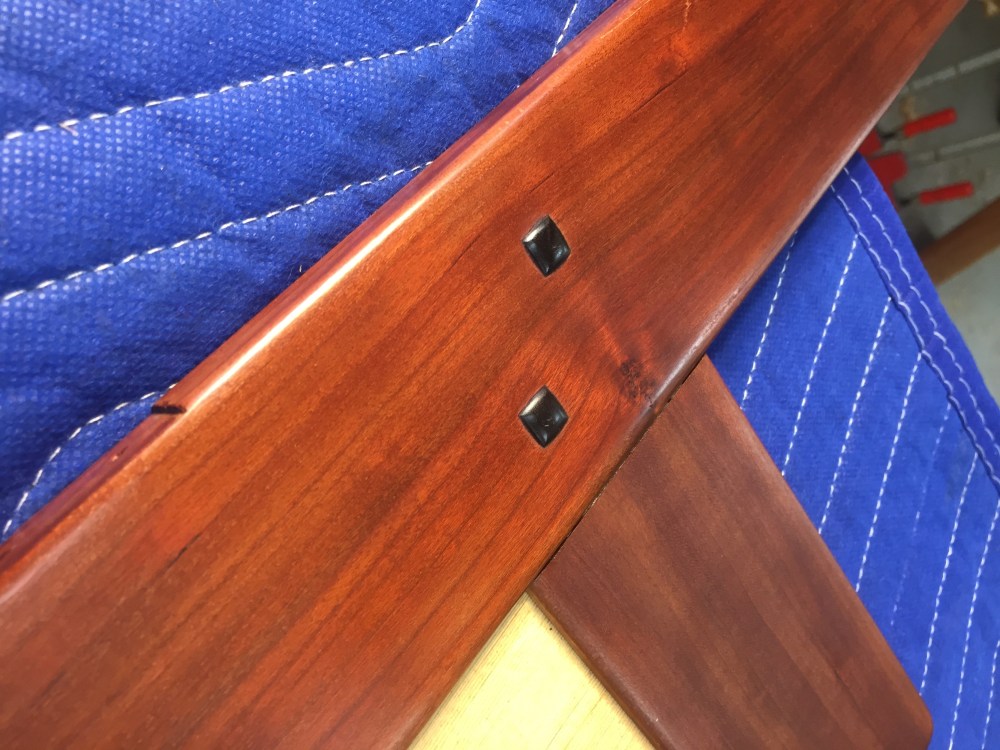
In square holes!  Okay, so not so new.  In fact, it’s a classic Greene and Greene detail from the Craftsman era.

My latest project, the privacy screen, incorporates this detail of square ebony plugs at the joints.  The dirty little secret is that although they look like they’re meant to secure the mortise and tenon joint, they are in fact, strictly decorative.

IMG_1633

I don’t plan to do a lot of “how to” posts here as there are plenty of more qualified folks who do that on the web.  In fact, the technique that I use for making the plugs is one described by Darrel Peart, the consummate authority on the manufacture of Greene and Greene detail.  My plugs are a little more pronounced than the original, as described by Darrel, but I’m not making a reproduction, and that’s the way I like them.

I have created a short photo (17 photos) essay of how I make and insert the plugs for those of you who might be interested.  You can find it here.

The privacy screen in nearly done, my next post will hopefully be the one to show it off.

Cheers,
Tom

When did you learn that?

Following my last post about treating cherry with lye solution, a local woodworking friend asked me,

“When did you learn that?”

I had to tell him that I’ve been using that technique for so long that I couldn’t remember where, or when, I learned how.  What I can clearly recall though, is the exact moment when I first became intrigued with the chemical coloration of wood.

When I was a youngster, Pop took it into his head to show me how to steam bend oak for a landing net hoop, for trout fishing. We would ideally have used green oak, but all we had were some very dry white oak boards. But Pop had a fix for that.  First, he ripped the boards into thick strips.  Then we took a section of black iron pipe with a cap on one end, filled it with water, and inserted the oak rippings. We left them in the pipe for a week, then drained off most of the water. We supported the pipe horizontally with the open end slightly elevated, and started heating it with a torch for about ten to fifteen minutes. Pop put on a pair of thick leather gloves, then quickly grabbing one of the strips pulled it out, and did a 180º free bend, bringing the ends together side by side, to be clamped together.

It was a very impressive demonstration, filled with science, drama, and a bit of adult language for emphasis. Pop was very pleased with the result, and with the opportunity to teach me something about woodworking. The problem was, I was less impressed with his steam bending demonstration, than I was with the effect of the iron pipe on the oak. The oak went in blond, but it came out with a wonderfully ebonized color, from contact with the iron. I was hooked after that.  :D

Cheers,
Tom

img_1384
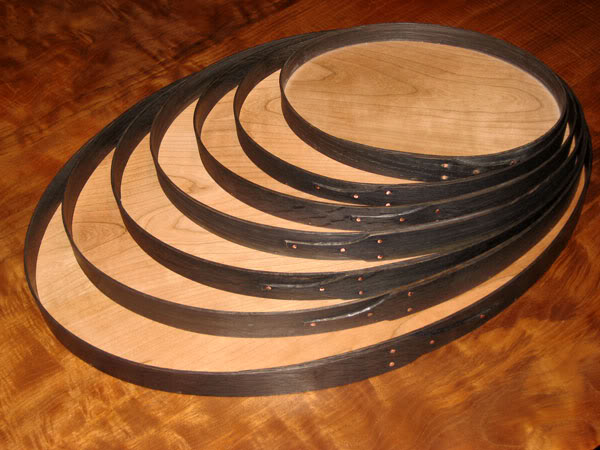
Ebonized, steam bent oak rims on nesting trays.

Brief Moments of Panic

I once had a flying friend, a former military pilot, tell me that flying missions was,

“Filled with hours and hours of boredom, punctuated by brief moments of panic.”

While woodworking is fortunately not filled with hours of boredom, it can occasionally be fraught with brief moments of panic.

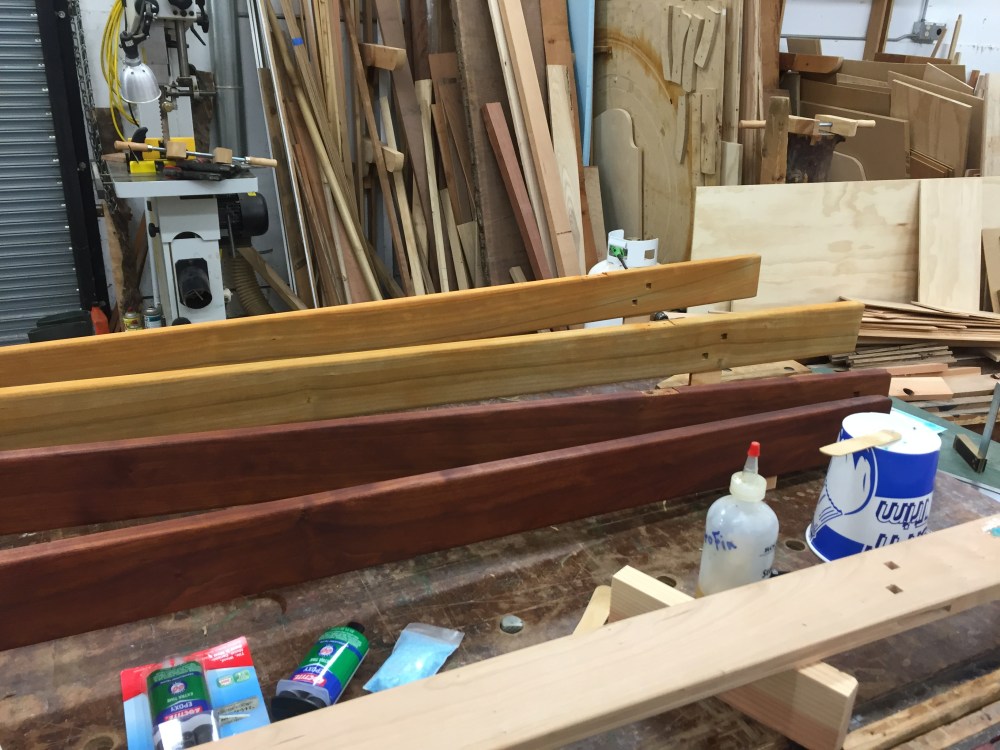
Some time ago, I had decided to artificially “age” the cherry in my privacy screen project, using a solution of lye in water.  I decided on this because I don’t feel like I’m connecting with customers when I try to explain how the piece will age, and I don’t have any good photographs for examples.  The piece will simply show better with an aged cherry look.  And also partly out of a desire for some instant gratification for myself.  I’ve used this procedure before on smaller projects with good results, so I thought nothing more about applying the lye to the parts that I’ve completed for the privacy screen.

The brief (and not so brief) moment of panic came after I applied the lye to the first two stiles (vertical pieces) of the screen.  Instead of the dark red I was expecting, I got a sickly, greenish yellow.  Mortified with the result, and not really knowing what to do next, I decided to call it a day, and sleep on it.  So today, the yellow had turned to a rusty orange color.  I applied a second coat of the lye solution, and the cherry started to turn the familiar dark red that I was looking for. A quick first coat of Daly’s ProFin, a wipe on polyurethane, secured the look I was hoping for.


IMG_1604

The photo above shows the first two stiles after two applications of the lye solution, and the next two stiles shortly after one application.  In the foreground, is one of the remaining untreated stiles.  My best guess, is that because I like to work with an abundance of caution, I used a weaker solution than usual, so the reaction took longer and a second application was required.  In the end, things worked out fine; crisis averted.

Cheers,
Tom

Must-resist-the-urge…

…to complete the first one, of three, panels.

IMG_1558

I’m definitely a “one off” type of woodworker.  I don’t mind making a repeat of a successful piece, but I really dislike assembly line fabrication of matching components.  So when I’m faced with a producing a set of identical drawers, or in this case, frame and panel assemblies, my overwhelming urge is to complete the first one from start to finish.  Of course, that method of work is terribly inefficient, and I won’t do that, but the pull of the dark side is strong with this one (sorry, Star Wars reference).

The nicest part of today, and the next few days, is that the only power tool I used was the electric chainsaw, to cut firewood.  Everything else was accomplished with blissfully quiet hand tools; making shavings, not dust. It’s very gratifying to now and then reconnect with my hand tools, and a different pace of work.  I’m looking forward to working on the second one tomorrow.

Cheers,
Tom

Making it up as I go along

Hey Folks,

I haven’t talked much about my latest project; a trifold privacy screen, made of cherry and CVG (clear, vertical grain) douglas fir.  It’s a combination that has worked well for me in the past, and hopefully will again.

Screen

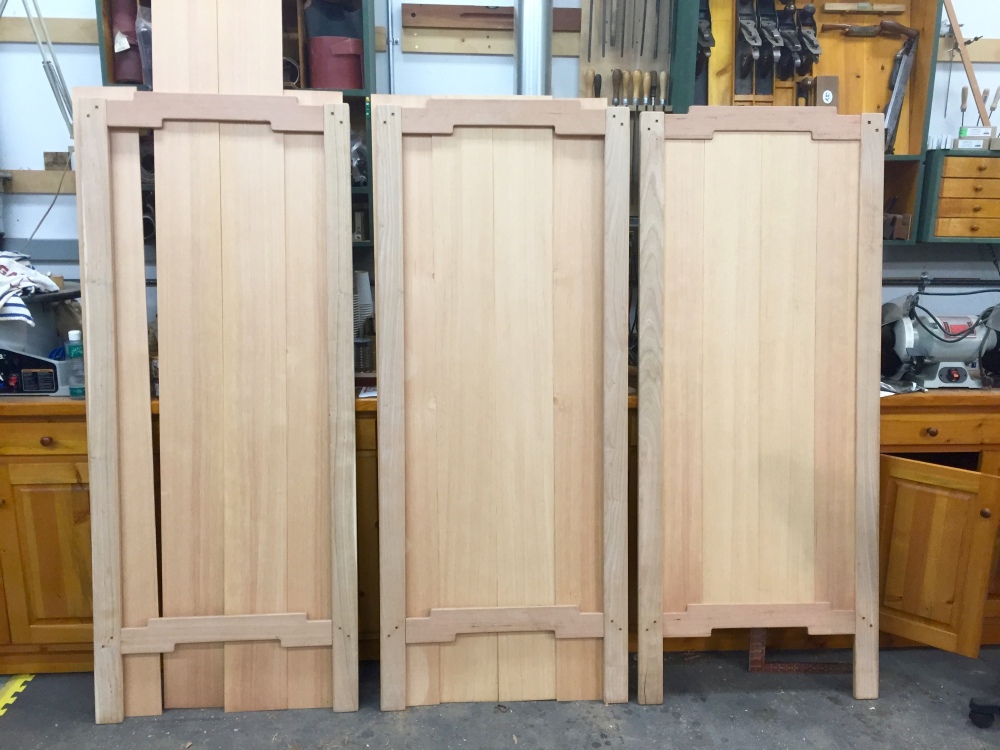
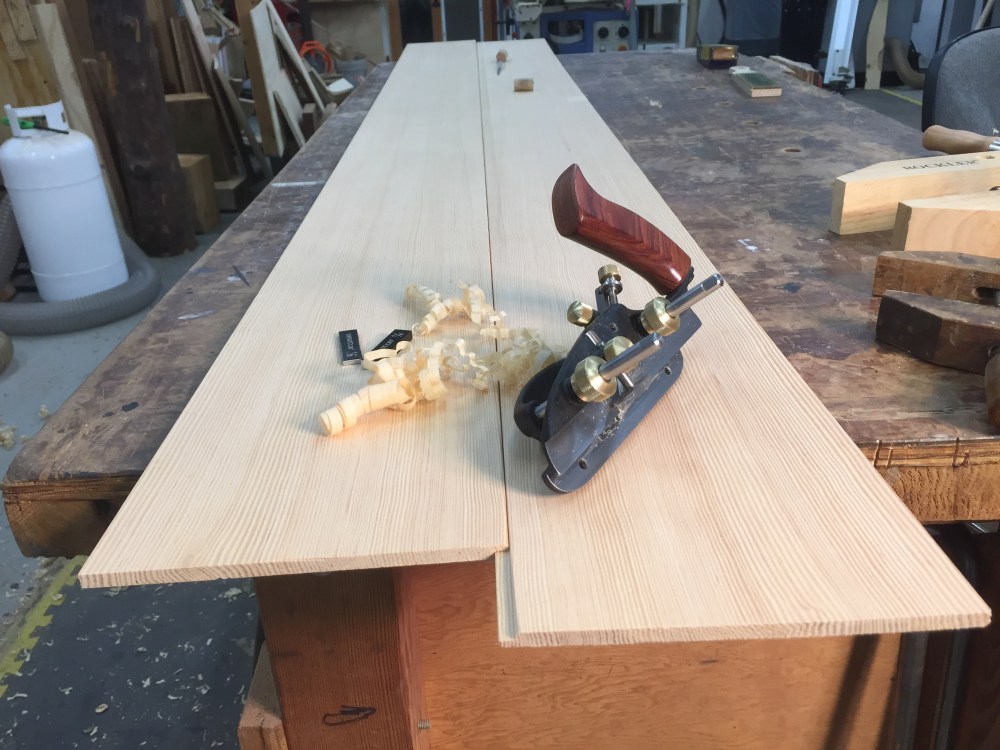
The screen is a frame and panel construct with Greene and Greene styled details.  Some of these include, heavier stiles (vertical component) than rails (horizontal component), a cloud-lift motif in the rails, rounded corners and arrises, and square ebony plugs at the mortise and tenon joints.  The cloud-lift in the rails translates to a more complicated shape for the doug fir infill.  The relatively broad expanse of the panel would also be sensitive to ambient moisture changes, and the resulting movement might be too much for the designed shape.  So instead of gluing the panel up (as I had planned to do today) instead I unplugged the glue pot and took down last year’s Christmas present, my left handed plough plan.

IMG_1553

By planing an intersecting half lap on each edge of the panel boards (and not gluing them), there are multiple reliefs for movement.  Since the panels are only 1/4″ thick, I decided to do the job by hand.  There is a slight chamfer on each side of the joint, making a narrow “V” between the boards.


Version 2

I’ll have more pictures later, as things progress.

Cheers,
Tom

Ps.  The heron images are for study only.

How much is that rock-er in the window,…

IMG_1524

…the one with the yellow wedge tail?

Okay, my apologies for the [ahem] artistic license with the song lyrics.  I’m just so pleased that the display window has attracted so much attention in the neighborhood, that I’m waxing lyrical.

IMG_1528

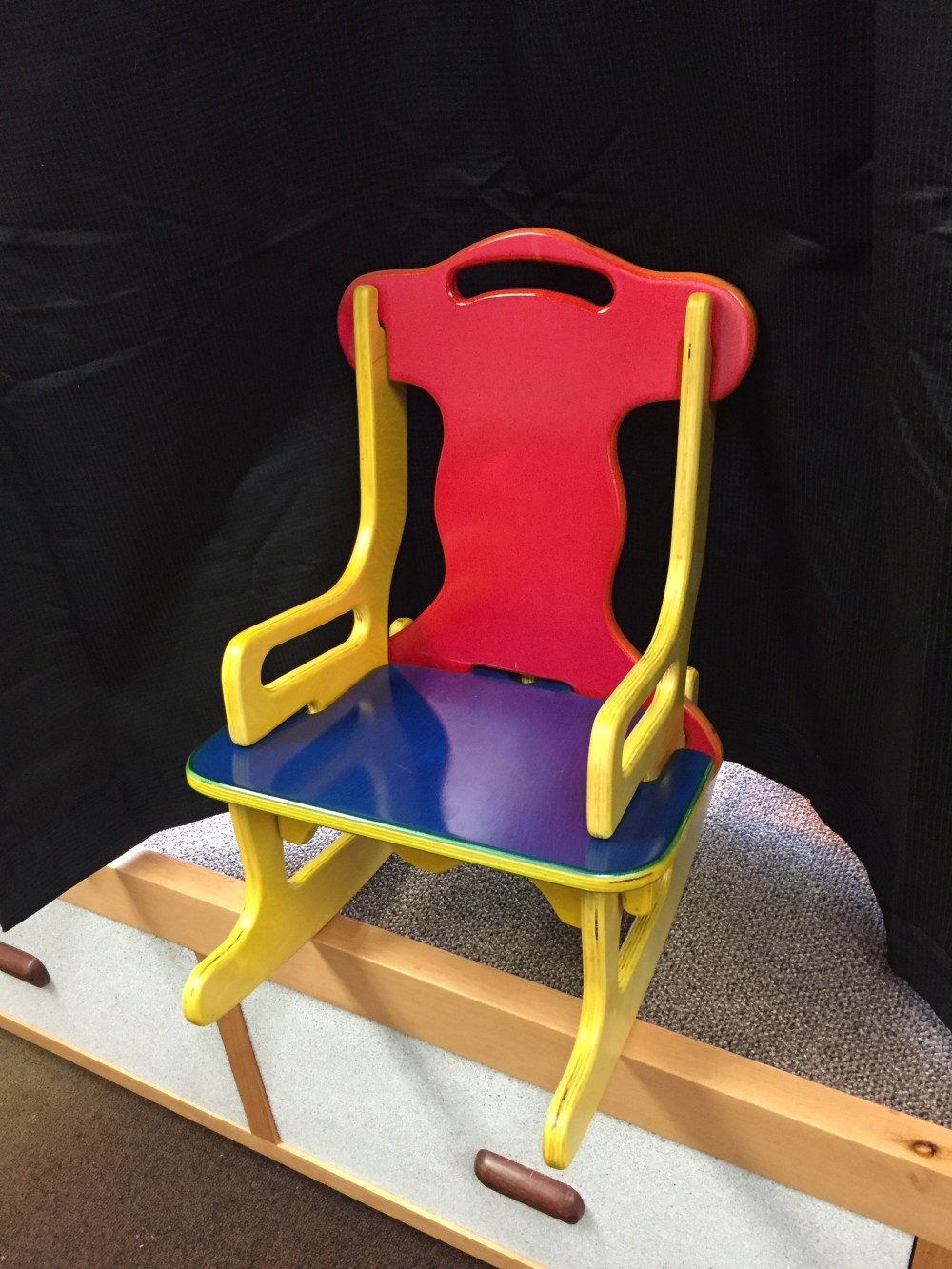
Yesterday, I put this childs’s puzzle rocker in the window, just in time for Christmas. It’s six interlocking pieces, made of baltic birch plywood, finished with tinted shellac.

No bites yet, but as my Pop used to say,
“You don’t catch fish, if you don’t go fishin’.” 😉

Cheers,
Tom

Roorkhee II

Since the Audry II tabouret was so successful, perhaps an other “strange and interesting” chair will be equally successful.

IMG_1517

IMG_1518

I’ve just completed the first of two new Roorkhee chairs.  These two are made with lighter colored, softer leather than the previous chair.  I like the more rustic, irregular color of the tanning of these chairs.  It sort of fits with their camp chair pedigree.

IMG_1523

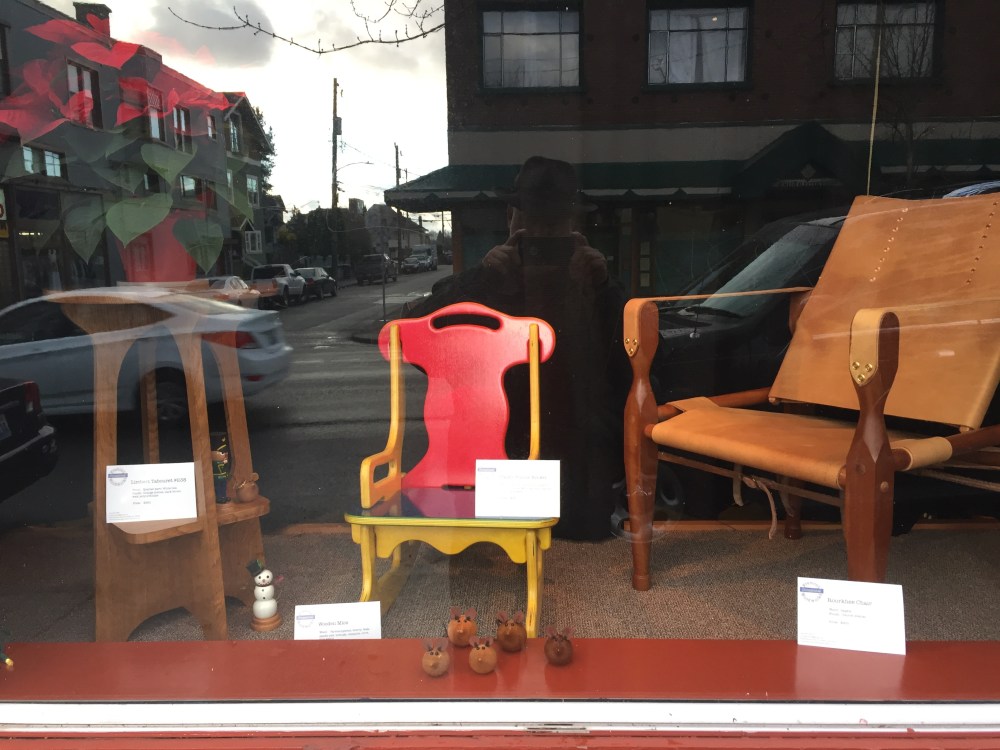
If you’re not familiar with the Roorkhee chair, check out my previous post about the opening of the display window at the shop.  These chairs are very comfortable, very portable, and for sale at the shop in Fremont (dog not included).

Cheers,
Tom

The skin is in,

… or in other words, the hide has arrived.  And Peggy Tzu, it’s not the world’s largest dog chewy, sorry.

IMG_1503

Anyone who knows me, knows that I’m not a good multitasker.  In fact, I tend to be a linear, methodical, single minded unitasker; much to the chagrin of my very capable multitasking wife, Kristen.

Some time ago, I completed the wooden elements for a couple of Roorkhee chairs, but I’d given up waiting for the leather to arrive, and started on a different project.  Of course as soon as I started on the next project, the leather arrived.  So today, I shifted gears and spent the morning cutting out the leather parts.

IMG_1504

I’m reasonably confident when picking out wood, or ordering it online, but leather is not my forte’, and it seems that anyone can name a leather product anything they like, so it’s hard to know what you’re getting, if you haven’t bought it before.  This side (1/2 of a hide) turned up a bit softer, but thicker, than what we used in the class were I learned to build this chair.  So these next two chairs will look a bit more rustic, but should be very comfortable.

So now, I have three projects in the air at once, and I’m starting to sweat a bit.  This is not the leisurely retirement I had once envisioned, but I’m sure to sort it all out, and enjoy every minute of it. 🙂

Cheers,
Tom