Finally, something new…

for the window.

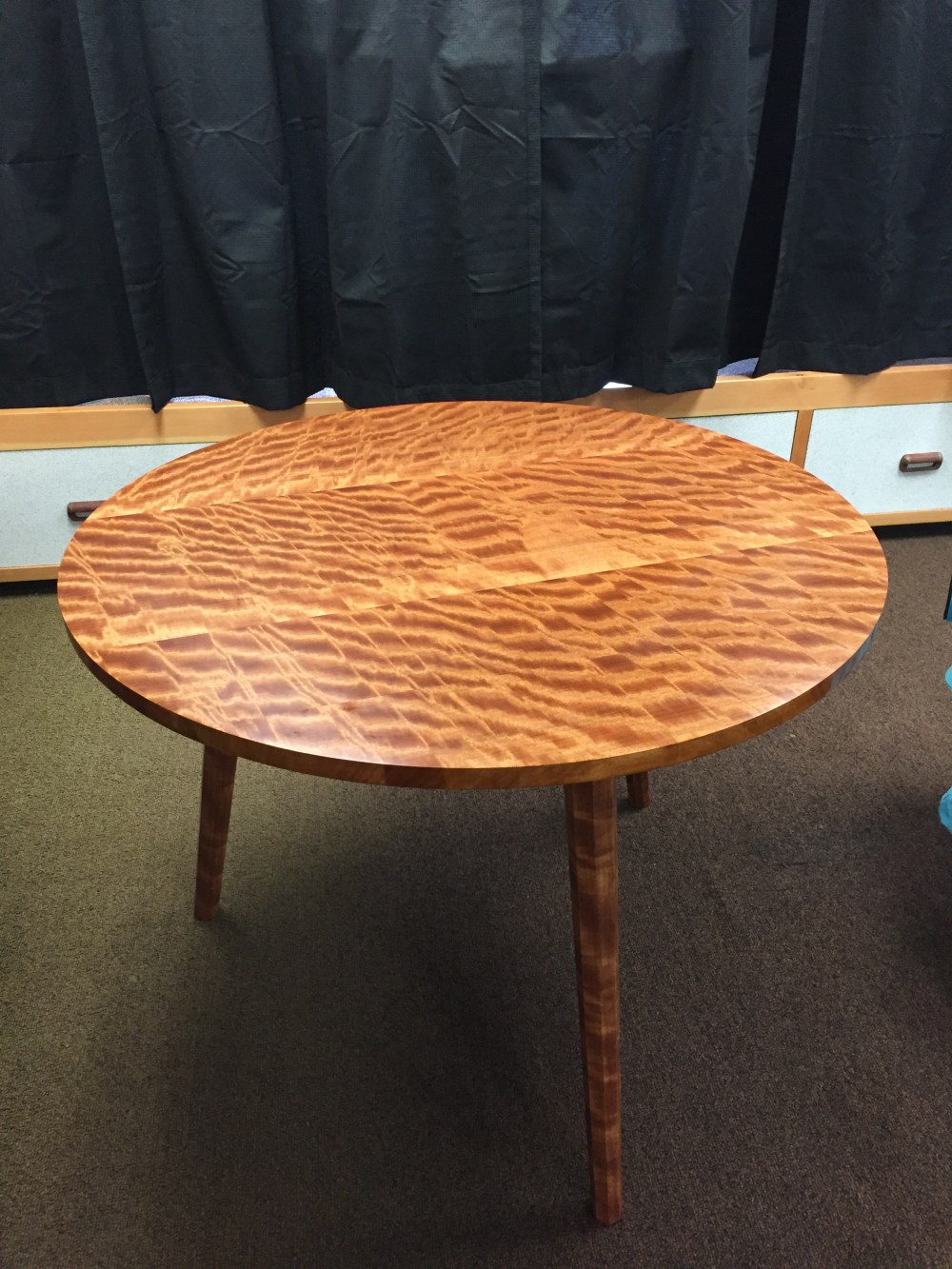
It’s been a long time coming, but I have finally finished the makore stake legged table that I started about five months ago.  Or should I say refinished, given that I had to remove and reapply the finish before I could call it completed.

img_2102

The next problem was,
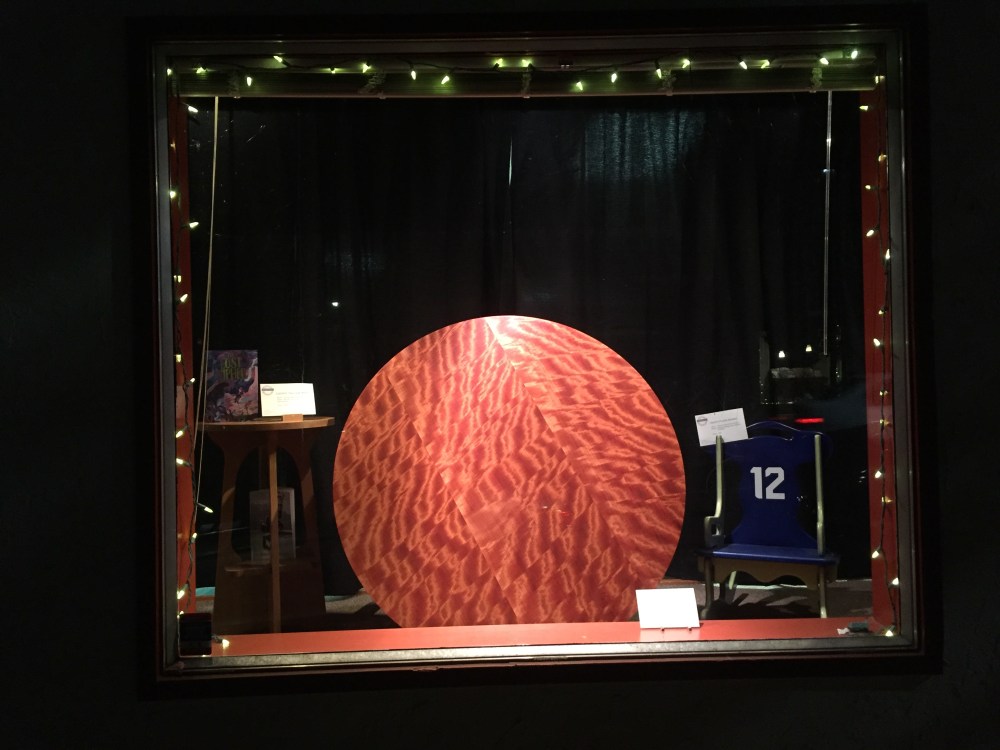
How to position it in the window so as to show it off to its best advantage?  The oak table of the same design was best displayed upright, as the grain, although not unpleasant, was nonetheless, somewhat ordinary.  The grain of the makore table is however, extraordinary, and easily its best feature.  The height of the window above the street makes the top of an upright table invisible to nearly everyone.

img_2103

So while the oak table was displayed upright, I tipped the makore table over to rest on its edge.  Hopefully, it still resembles a table, and will strike the fancy of a potential customer.

Cheers,
Tom

Staging an intervention at the bar

Hey folks,

This morning marked a watershed moment at my local watering hole / breakfast place.  Ha!, the place  across the street from my shop, and the place where I go for breakfast before work, the place where I go for my end of day reward, was in need of a woodworking intervention.

You see, when they put in the bar, they used a piece of reclaimed bowling alley. That in itself was not such a problem (although repurposed bowling alley does have its issues).  What turned out to be a problem was the water soluble finish that the installers put on it, over the alkyd floor varnish that was the original finish.  The water soluble finish not only didn’t play well with the varnish, it became a sticky, dirty mess over time.

Ha! is owned and run by the nicest and hardest working couple you would ever want to meet.  Al cleans up and opens the place at 8:00 AM, and Alicia takes the closing shift ’till 2:00 AM, all while they raise two great kids. So I always felt guilty for complaining about the bar surface.

This week, Al and Alicia left the bar in the care of their employees, and took a few days to get away with their kids before school starts.  So this morning, Caitlin, the morning bartender, and I decided to take matters into our own hands and started scraping the sickly stuff off the bar, after the morning rush had died down.


I applied some mineral oil to the top to protect it in the short term, until a permanent finish can be applied.   I made no attempt to get all the dark spots up; to some extent, they add to the character of the place.

It’s so much better now, I may just have to go over there to enjoy my own work. 😉

Cheers,
Tom
(P.s. Don’t forget to tip your server. 😀)

Auurrgh! (I hate do-overs)

Sometimes, do-overs are a good thing, but not generally in woodworking.  I was once cautioned by my paternal grandfather that,

There’s never time enough to do it right, but always enough time to do it over.

That observation always annoyed me, probably because it was too close to the truth.

So, if I have been ‘radio silent’ lately, it’s partly because I have been procrastinating about starting over on the finish of the makore table.  See, I foolishly decided to experiment with a new finish component, some garnet shellac that I had bought online.  Unfortunately, the shellac had a lot of insoluble solids in it that didn’t show up until there was a build up of about four coats.  The effect was to muddy the transparency of the finish and subdue the beautiful chatoyance of the wood.

It’s bothered me so much that I just sort of shut down for awhile, to take a break and convince myself that it needed to be removed and replaced.  Eventually, my wife Kris reminded me that I would never be happy with it, and would regret it if it left the shop uncorrected.

I guess when other folks can hear the voices in your head better that you can, it’s time to pay attention.  So yesterday, I started sanding the finish off with 36 grit sandpaper, and working my way back up to 320 grit.

It takes quite awhile, because I dampen the surface between grits to raise the severed grain, then wait for it to dry before proceeding.  Today, I put the first coat of finish on (no shellac this time), and the process continues.

So with all due respect to Granddad, I think that I’ll continue to,’do it over’, until I get it right.

Cheers,

Tom

Fixing Mistakes

Because as they said in Latin class, faeces sunt (you know, “stuff happens”).

A while back, I took a break from woodworking to do a metal working project for the shop. Unfortunately, metal work and woodwork seldom play well together in the same shop.  The oil and grease lubes used in working metal tend to attract sawdust, and if they get spread around the shop, they can pollute the raw, unfinished wood of a project in progress.  That’s just what happened here.

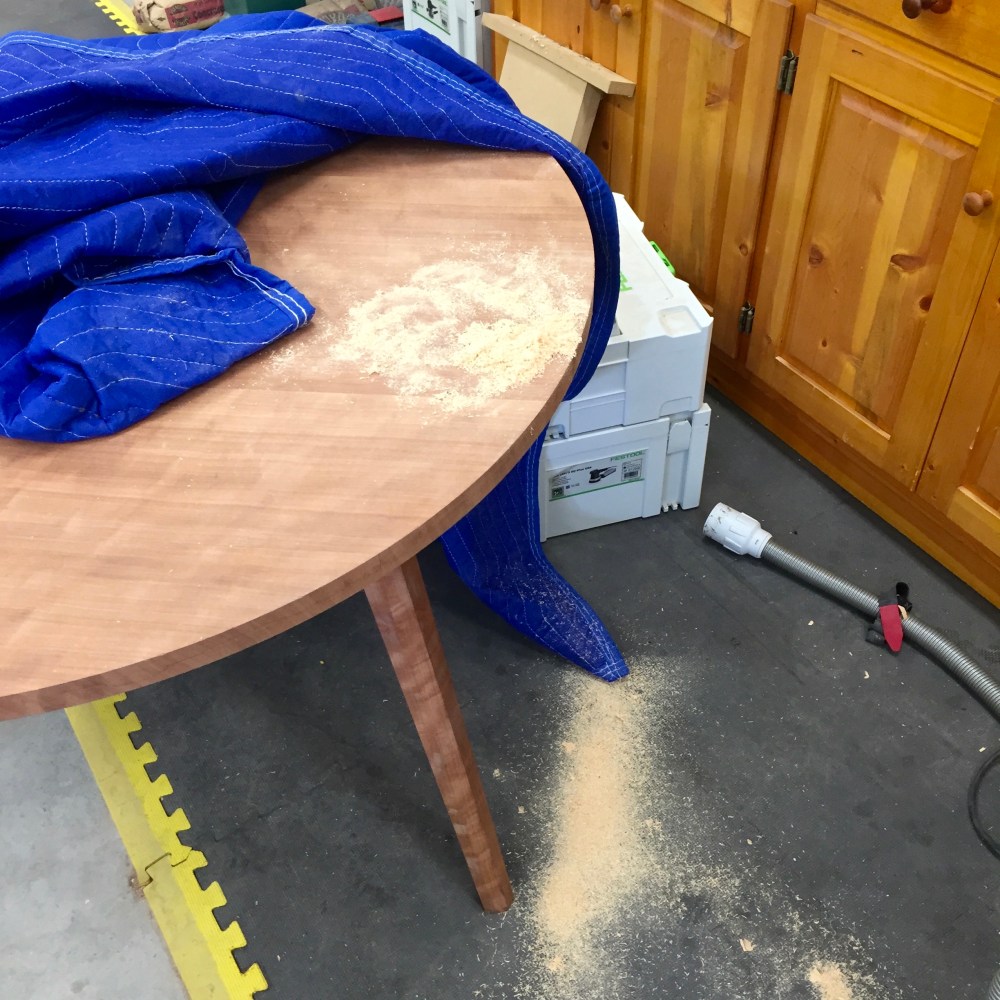
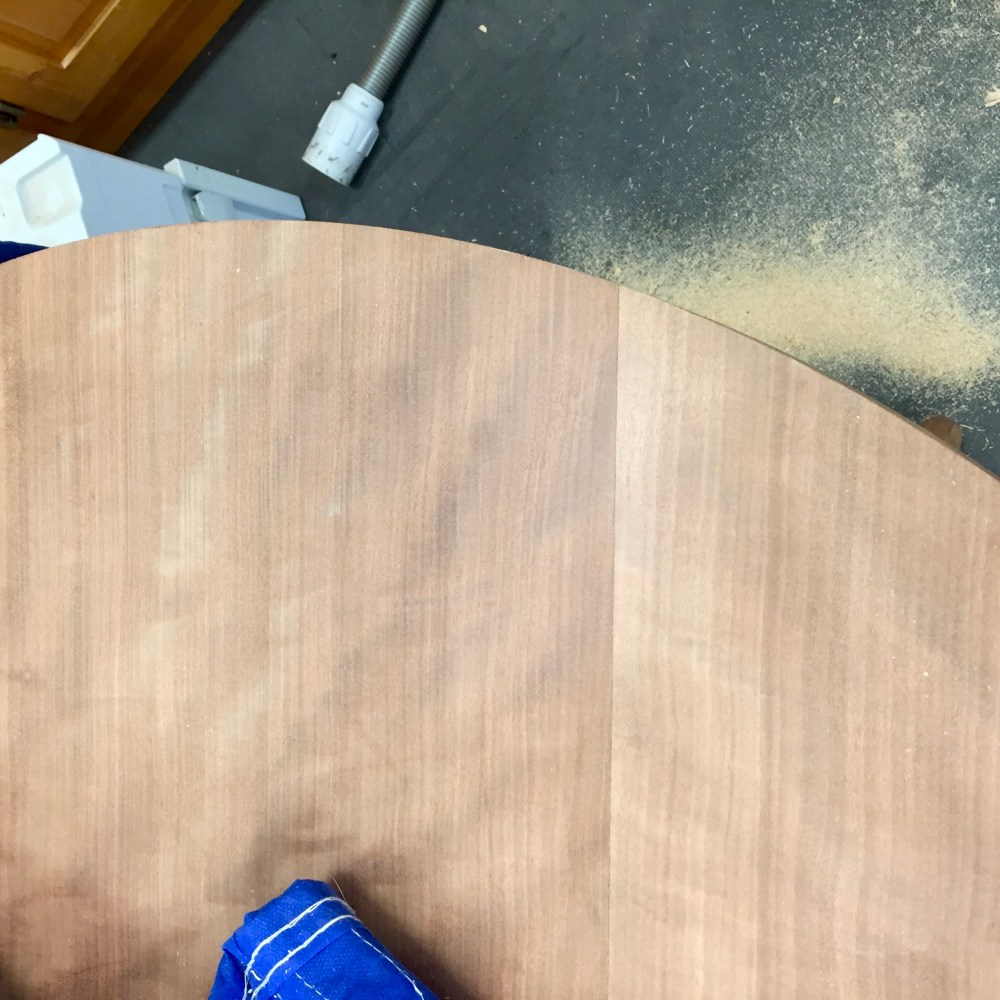
Somehow, I managed to get lubricating oil spilled on the surface of the makore table before it was finished.  Unfortunately, I don’t have a photo of the spill, but the oil soaked into the wood and would have ruined the finish if not dealt with.  The solution was to repeatedly rub some fresh sawdust onto the surface, replenishing it as it became polluted with the oil.

IMG_1986

Eventually after repeated applications, the oil was effectively removed.  The rubbing did leave the wood surface slightly burnished, sanding with the last grit used should take care of that.

IMG_1990

Apparently, those lessons in solid phase partitioning theory that I sat through in chemistry class are still paying dividends, even in my retirement.  Now to get a coat of finish on this thing before anything else happens.

Cheers,
Tom

Not so funny bunny

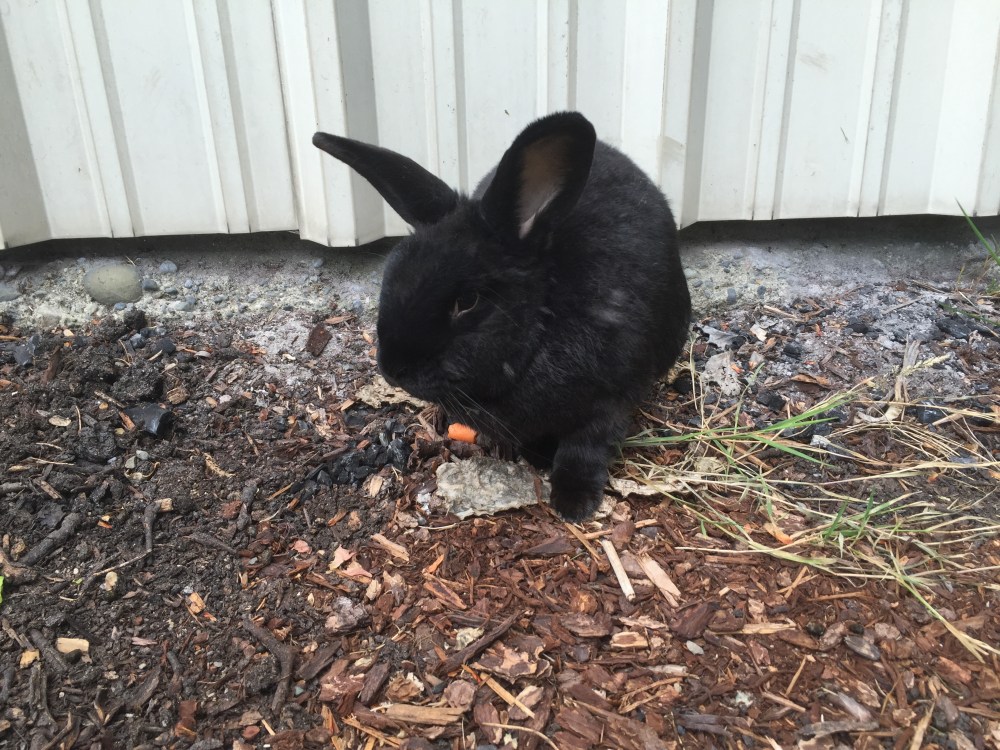
Although it’s not woodworking, this problem at the shop has me hopping mad.  Someone in the neighborhood decided that their Easter present had outgrown its welcome and dumped it off in my lot at the shop.  Since the rabbit is obviously a domestic pet, I first assumed that there was someone in the neighborhood who was missing him/her.  After canvassing the area with flyers for four days, I’m convinced that no one wants him/her.

Although the rabbit hasn’t harmed anyone, he/she has destroyed my garden, and has even damaged my apple trees.  So the “Black Bunny of the Apocalypse” has got to go.

IMG_1925

I originally decided to take it to the city’s animal control shelter, but the barista across the street has found a family to adopt it.  So tomorrow, after a tempting meal of carrots, his next immediate home will be a large cardboard box. :-/

My Bearded Carving Axe

Merry Christmas!

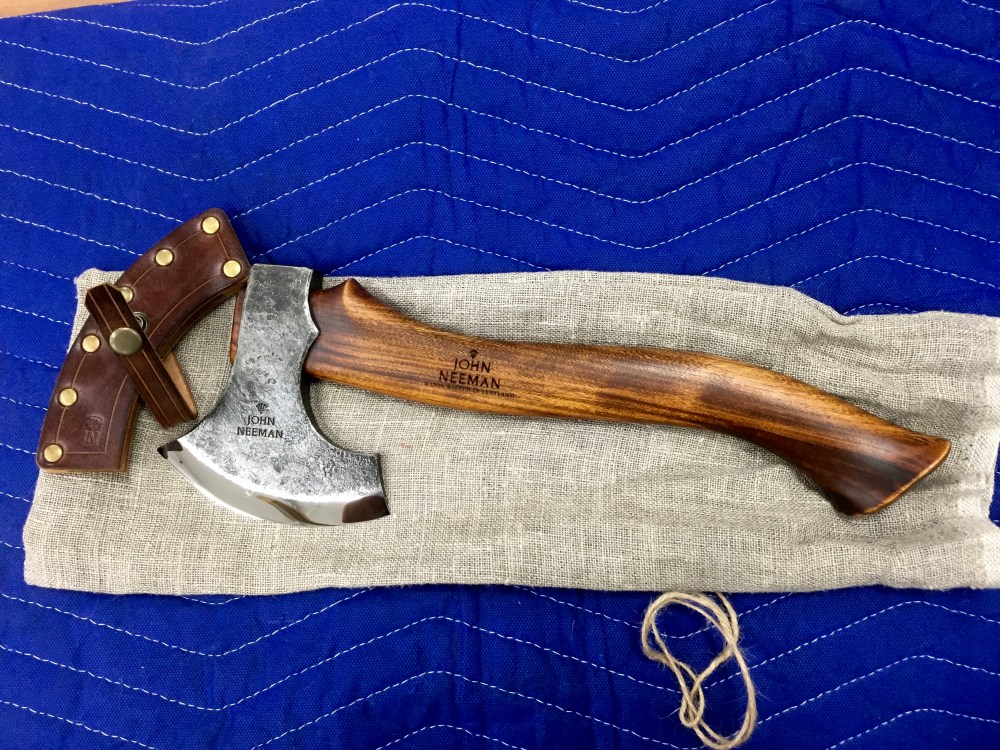
At last, my hand forged carving axe that was to be last year’s Christmas present has arrived.  What’s that?  You didn’t know that an axe could have a beard?  Why yes it’s true.  Although this beard is more likely to do the shaving than to be shaved.

IMG_1930

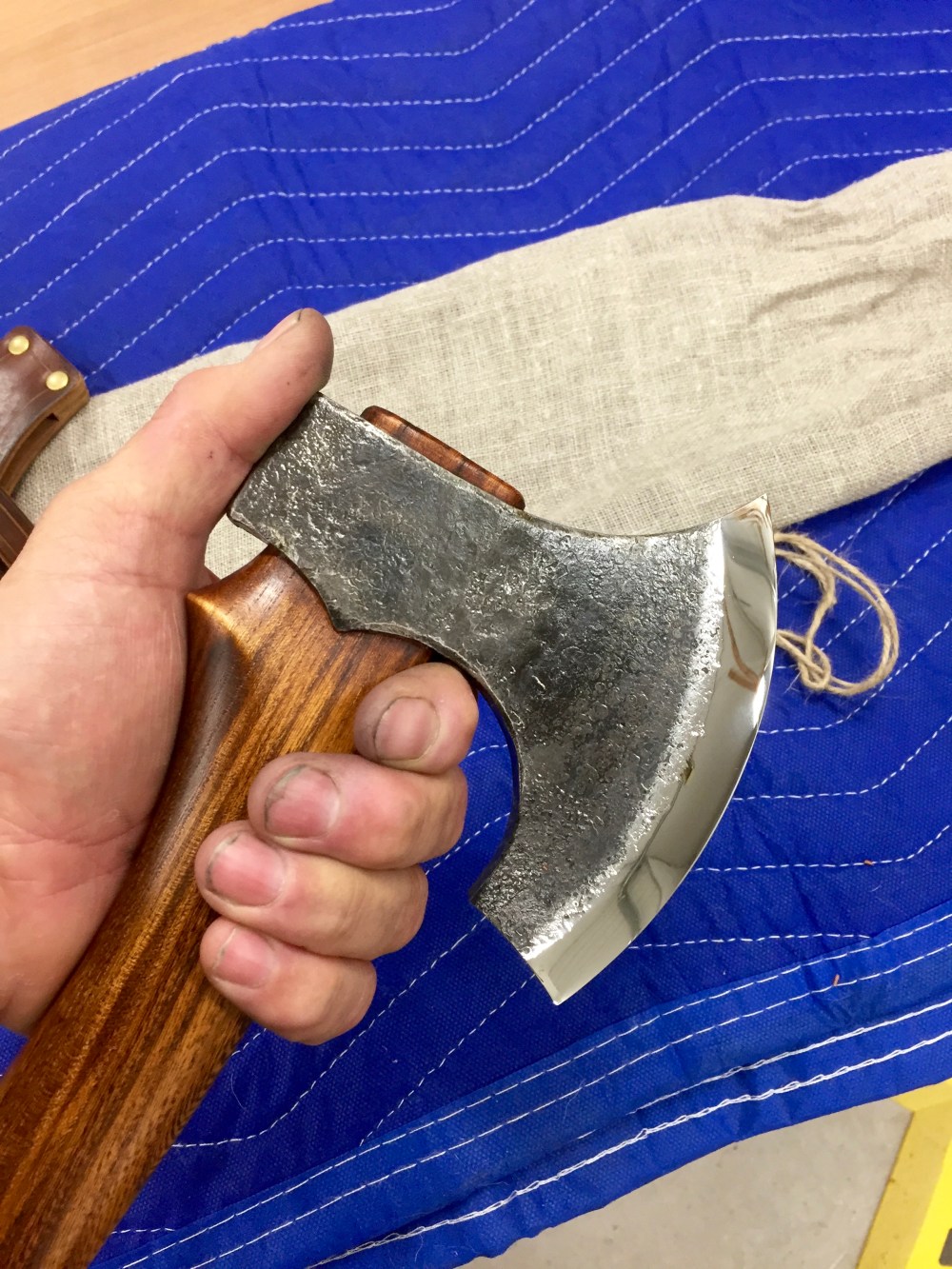
A carving axe is not for splitting firewood, or general chopping.  Although chopping is one of the ways the axe can be used, it is more often used like a large knife.  The grip is up near the head of the axe and the beard overhangs your fingers, as shown below.  The long, curved edge makes this axe an excellent paring tool, and it is razor sharp.  By using the thumb of your other hand on the toe of the axe, you can exercise a great deal of control over the cut.  So yes, they have toes too, and heads, and eyes and heels and cheeks as well.

IMG_1931

The bearded axe can do amazing things in the hands of a skilled worker.  In Norway, it’s considered an essential boatbuilding tool, and can be employed as the only tool.  I’m planning to make some spoons first, boatbuilding will have to wait.

Cheers,
Tom

From the Archives

Hey Folks,

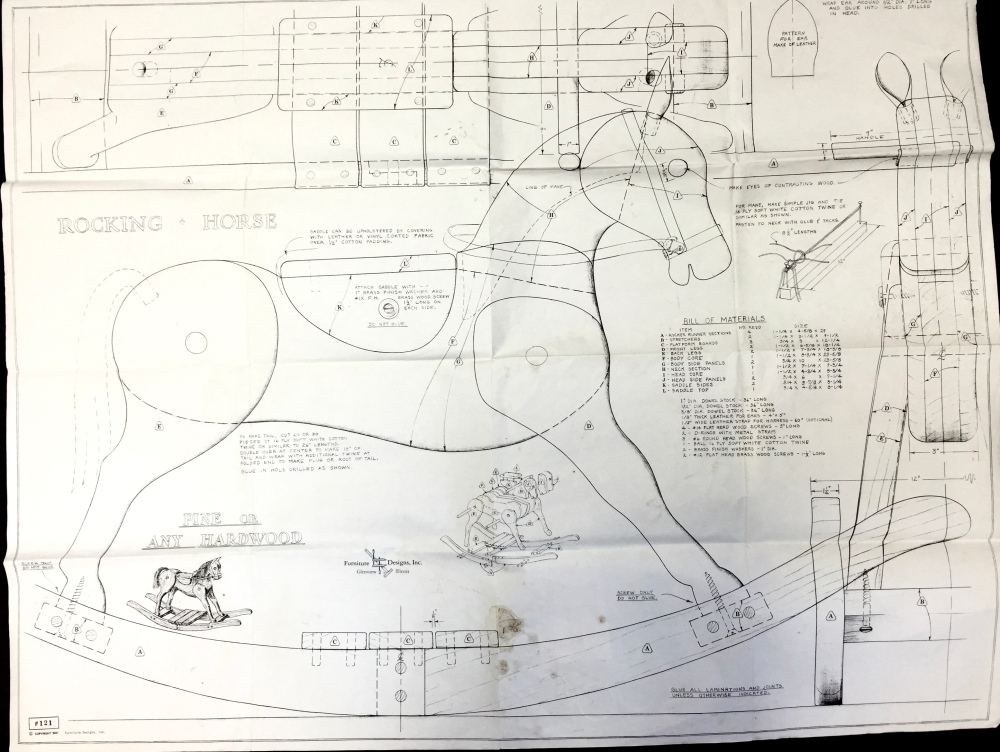
I was cleaning out a drawer in the shop today, trying to create some space for something, and came across this plan.  It’s copyrighted 1981, but I bought it in 1989 and built it less than a year later.

Unfortunately, I don’t have a picture of the completed project but imagine, if you can, a dark wine red horse with white markings and a braided polyester mane that resembles dread locks.  I called him Robbie the Red Rastafarian Rocking Horse, and he absolutely terrified my god-daughter when we put her on him.

The terror was short lived however, and eventually both she and her younger sister enjoyed climbing all over him like he was a jungle gym.  He has since been handed down to another family with budding equestrians, so I’ll file these away again, in case I get the chance to make another sometime in the future.

IMG_1891

Ps.  I can’t claim any influence, but she’s now just finishing up her internship as a new equine veterinary, and I’m very proud of her.

Cheers,
Tom

A Beautiful Mistake

Hey Folks,

Today, I went to the post office to retrieve what I thought was a a late Christmas present from Kris. She allowed me to purchase a John Neeman carving axe back in September. Unfortunately, what was in the package was a Baltic Viking Axe, a “Braveheart”.

Image

Image

Image

Image

The edge is sharp enough to shave with, and the runes on the handle are an old norse poem.

It’s so beautiful that I hate to send it back, but I don’t really need it, someone else is missing it, and I really do want that carving axe.

But that’s another story.

Cheers,
Tom

Sculpted Rocking Chairs

Okay,

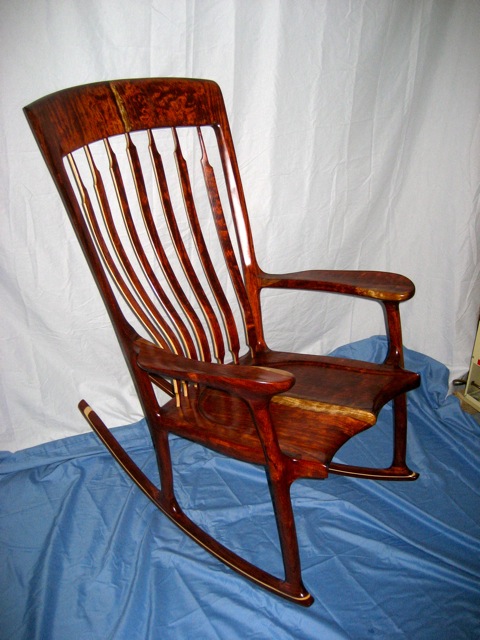
So this is a total non sequitur to the topics that I’ve recently addressed, but I build rocking chairs, and friends have asked me why I haven’t put a picture of a rocking chair on the blog.  I guess the reason is that I built rockers before I started blogging, so it’s not come up as a current topic.

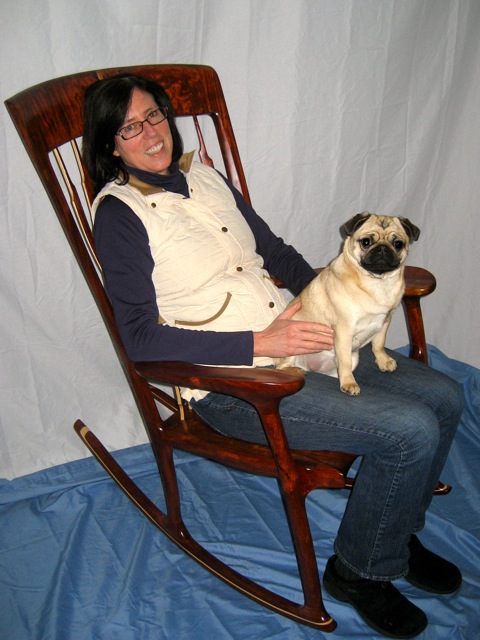
To remedy this, here are a few pictures of the rocker that I built for my wife, Kris.

First, you have to find the right piece of lumber.  It takes about 40 board feet of wood to make a rocker, in this case bubinga from Africa.

HELLOMOTOIDEN

Despite Peggy Tzu’s apparent preference for the piece on the right, I chose the one on the left.

When I made my first chair, with my instructor, we did it in less than five days.  But of course his shop is dedicated to making chairs.  He had multiple router stations, each with a different bit set to the correct depth of cut, and multiple sanders each with a different grit of abrasive.  So, no changing of bits, or grits; plus a number of other time saving set-ups that most shops (including mine) don’t have.  Add to that, the time it took to construct all the necessary jigs and fixtures, and I have a good excuse for taking six months to finish my first solo effort.  Right?

img_3077img_3081

After a number of months, the finished product.

img_3083

It’s always nice to have a satisfied customer, even better when there are two!

I shouldn’t have to say it, but this one’s not for sale.  If you would like one, stop by the shop for a fitting.  They come in three standard sizes, and can be customized to suit.

Cheers,
Tom

Soap Soup

Hey Folks,

Today I finished up the white oak staked leg table.  And by finish, I mean with a soupy mixture of pure white soap flakes in hot water.  I’d heard of a soap finish from my grandmother and have often wanted to try it.  She was a homestead girl, and literally grew up in a log cabin.  Their family table had a soap finish.

I have also heard it called a Scandinavian soap finish, probably because they are the only people who still use it.  I got this recipe from Christopher Schwarz’, Anarchist Design Book.

IMG_1855

It’s applied with a rag, and it’s about the consistency of mayonnaise.  It soaks in a bit, then starts to harden up.  After it hardened, I buffed it off with a dry rag.

IMG_1859

The next day, I sanded it with 320 grit, and applied some more soap.  This time it was a bit stiffer, having hardened up overnight.  After about an hour, I buffed it off with a dry rag, and it left a nice soft luster, sort of like a soft wax.

IMG_1861

I like this finish, and I think that I’ll use it on another table some day.  It has a very practical and simple feel to it.  It’s easily renewable, and in fact, it needs to be maintained with a buffing of new soap now and then.  So the table comes with a package of soap flakes and some instructions for the buyer.

I’ve put it in the shop window, but I don’t have a picture yet.  Maybe tomorrow.

Cheers,
Tom