Persistence pays

Hey Folks,

I’ve been of several minds over the title of this post because it covers a number of different reasons for a recent success.  The success was finding some beautifully ray fleck  figured white oak for my next set of Limbert tabourets.
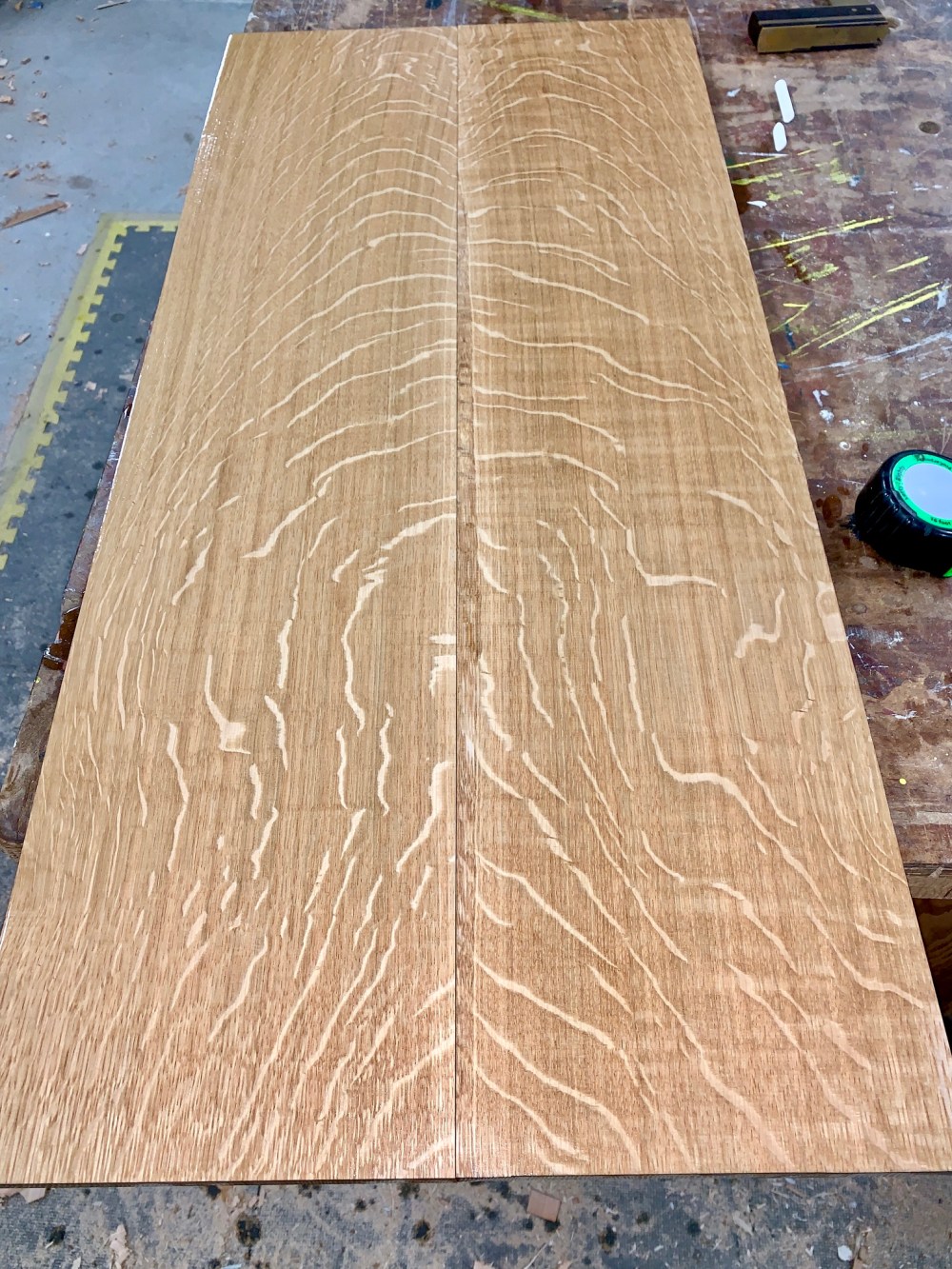
fullsizeoutput_3e6

Ray flecks are slices through the radial, medullary rays of the log.  These rays look like the spokes on a wheel when viewed from the end of the log.  Only logs that are quarter sawn will slice through these rays.
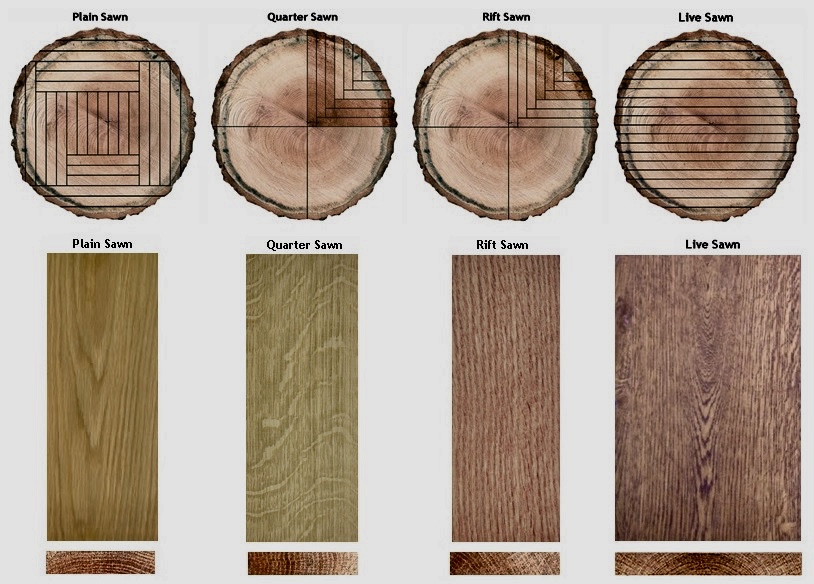
fullsizeoutput_3e7

Any other orientation of the log to the saw, and the rays become invisible. In any quarter sawn log, only about 25% of the boards will have any visible ray flecks at all.  This is all a product of the art and skill of the sawyer (as a woodworker I have no part in this), and so one idea for the title was to write an homage to the sawyer.

Thus, in any batch of quarter sawn white oak, there is a chance that some of the boards will have ray fleck figure.  So, if you have an indulgent reseller, or a good relationship with a sawyer, they might let you pick through their stock and select all the best pieces. That thought prompted the idea that I should acknowledge my supplier, Edensaw Hardwoods, and their very patient forklift operators.

But ultimately, unstacking, selecting and re stacking bundles of lumber is frustrating and physically hard work.  It’s really only possible with the help of a dedicated assistant who is truly supportive and believes in your vision of success.  So here’s to the persistence (and patience) of my best assistant ever (thank you Kris).

Cheers,
Tom

It’s always sumpthin’

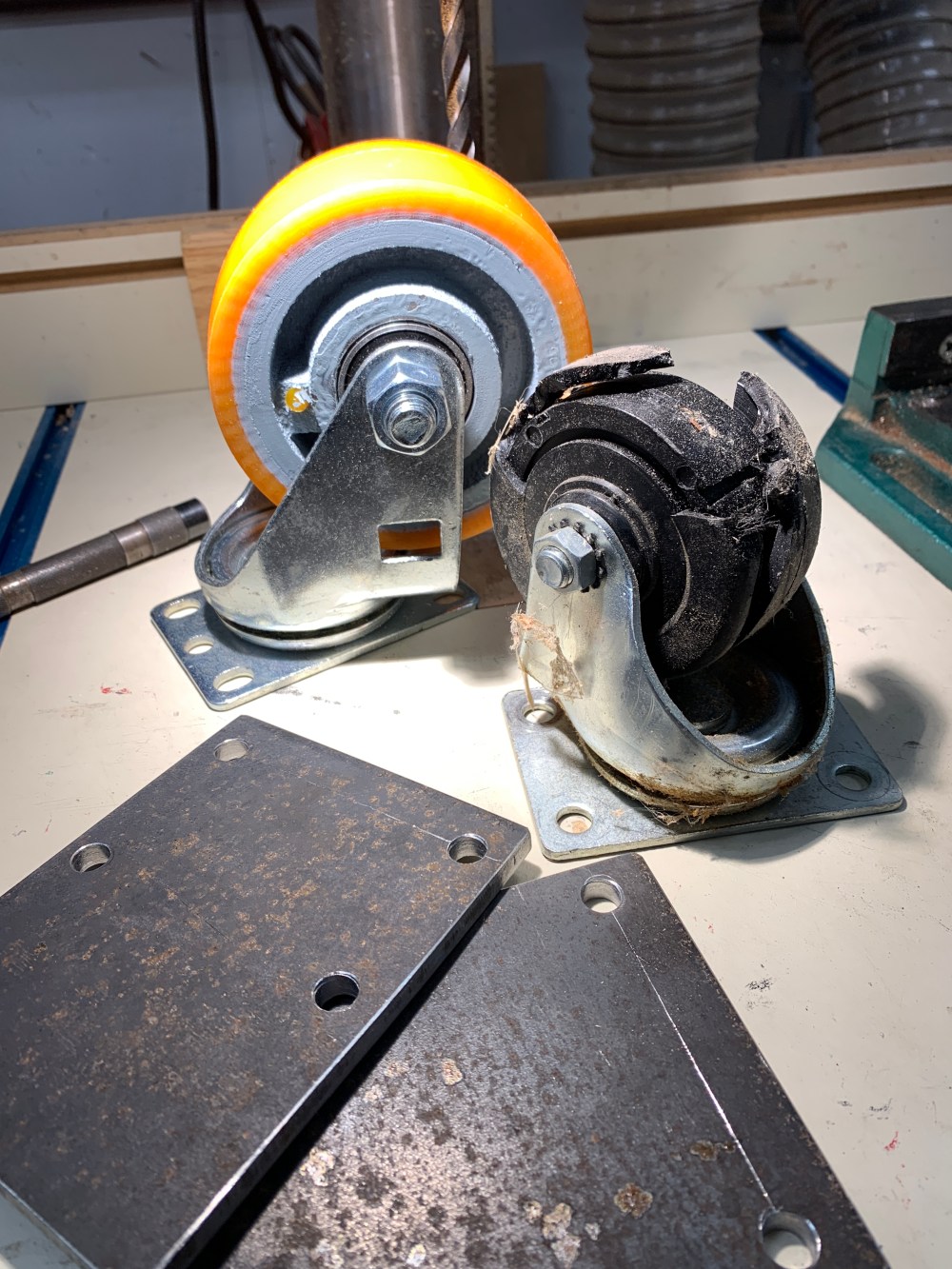
It sometimes seems as though no matter what you’ve got planned, there’s an alternate reality looming ahead.  Take for instance prepping thin stock for the shaker style tray making class.  Just pull the drum sander out from the wall and get started then…  Aaurgh! the casters under the carriage collapse.

Okay, so the drum sander is insanely heavy, and the casters have always been inadequate and there is never a good time for a failure, but…  Aaurgh anyway!

IMG_0045

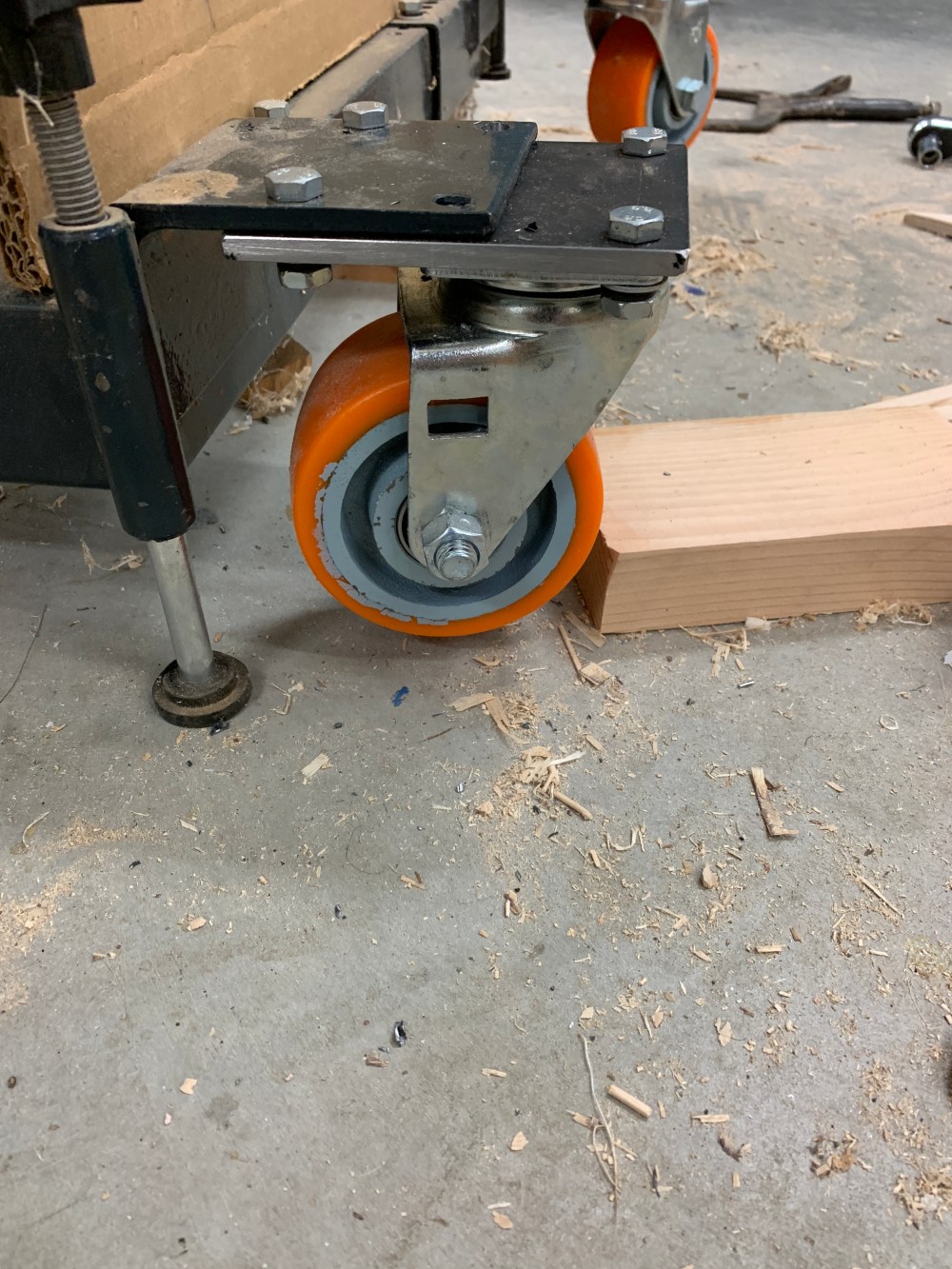
So instead of the too small (3″), too weak original equipment, I went ahead and ordered a set of  heavy duty 4″ cast iron casters with premium urethane tires.  Only problem is that the mountings for the 3″ casters don’t allow the 4″ casters to caster, that is swivel a full 360º.  It’s always sumpthin’.

IMG_0043

A few pieces of scrap plate steel, and some help from my friends at BARN (thanks Jamie), and a day’s work putting it all together and the drum sander is mobile again, only this time much more smoothly and easier to push around.

IMG_0044

Now, what was I doing before I was interrupted?

Prepping for class

Hey Folks,

I haven’t been posting much lately because I’ve been working on a commission, and I don’t comment on a client’s commission until it’s finished and they agree to the post.  The job’s done though, so now onto other things.

Working alone in the shop has its rewards and I do enjoy it, but I also enjoy interaction with other wood workers as well.  So toward that end, I have agreed to teach a series of courses at BARN (the Bainbridge Artisan Resource Network) on Bainbridge Island.  Bainbridge is just a half hour ferry trip from downtown Seattle, and BARN has a great creative facility.

The students will be making shaker bentwood boxes, and shaker styled tray sets.  I’m prepping all the stock for the boxes and trays, but the students will each make three of their own boxes and four of their own trays.  In the photos you can see the stock for both, ready for school plus two sets of trays ready for finishing.  The trays will be used for display at BARN and my own display window at the shop.

Cheers,
Tom
It’s nearly harvest time

Hey Folks,

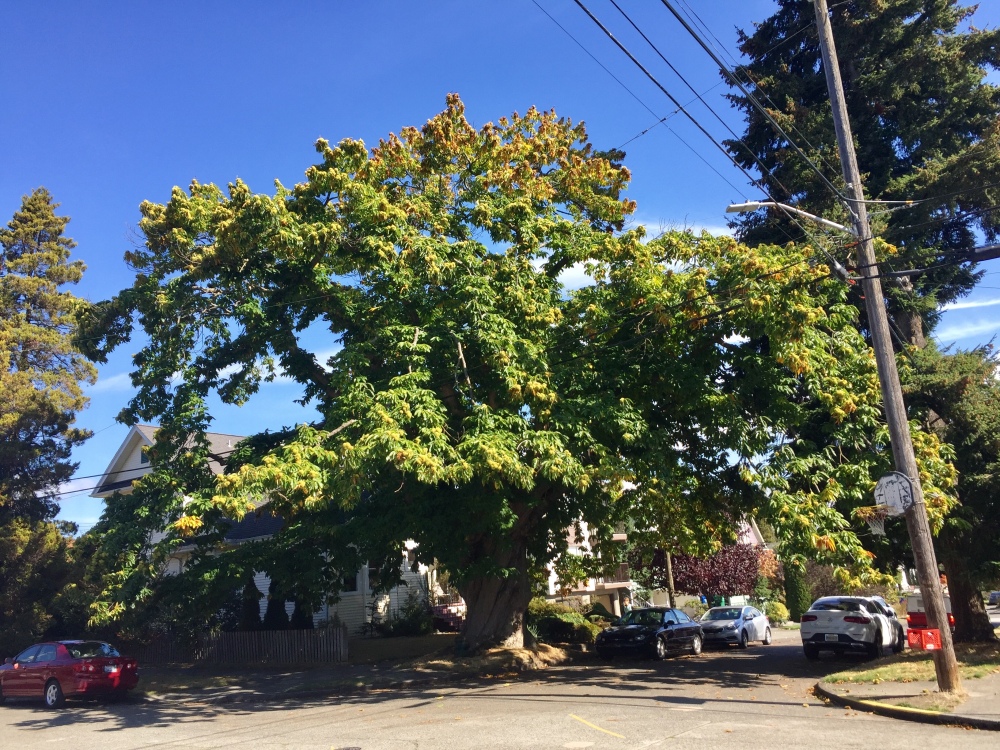
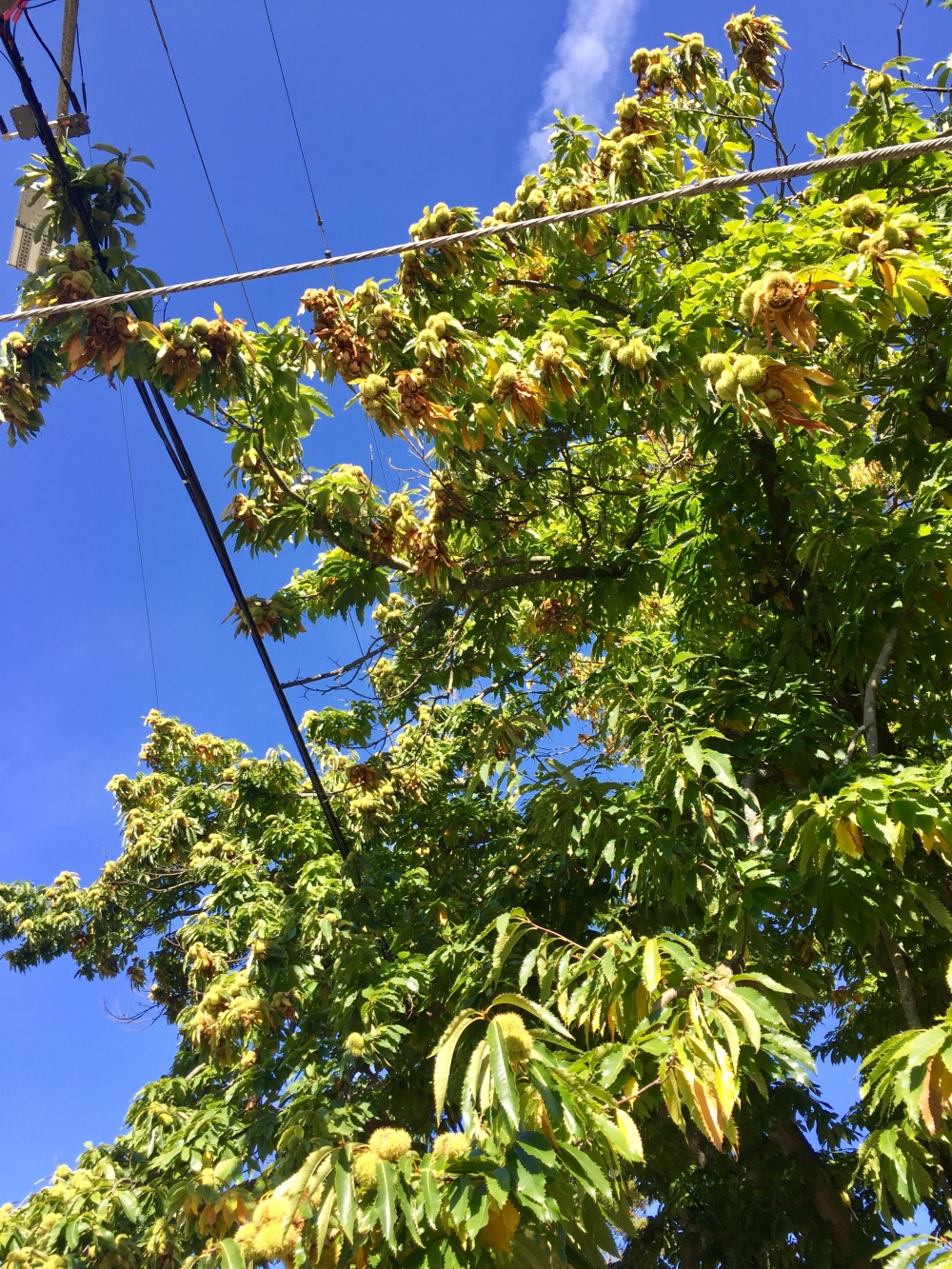
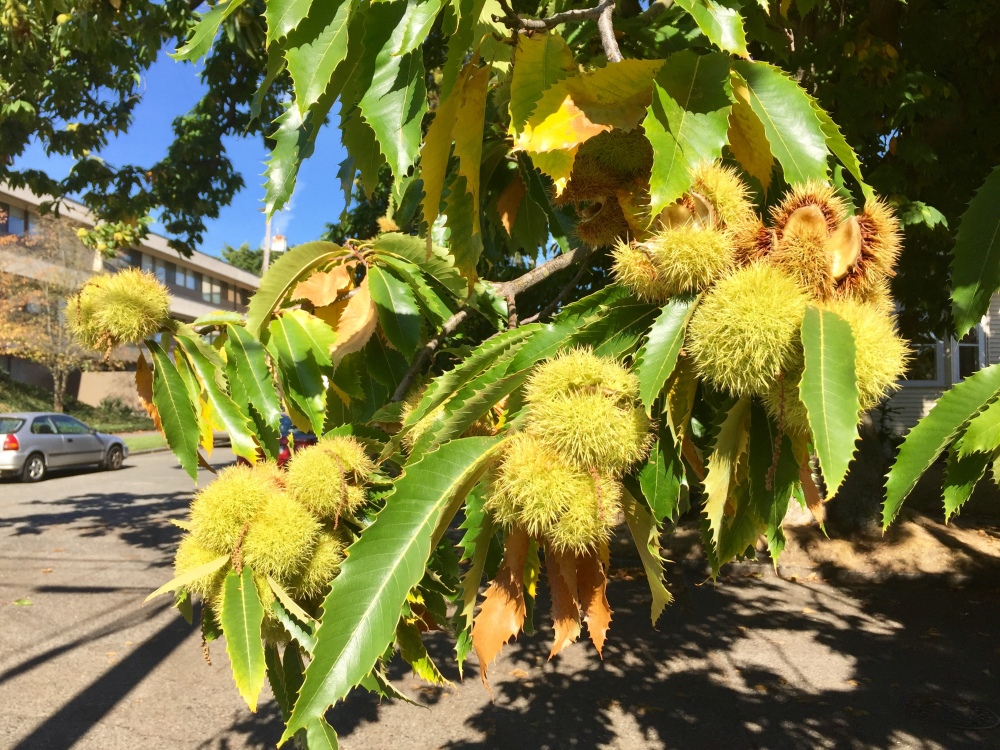
I’m lucky enough to have my shop in an older neighborhood with a number of really old and interesting trees.  Earlier this year, I showed off a dogwood tree from the neighborhood, this time it’s a venerable American chestnut ready to pop.

IMG_3284

Every year this tree is heavily laden with chestnuts that all seem to wait until the first really cold night.   Then they seemingly all drop at once, causing all the neighborhood squirrels to literally “go nuts”

IMG_3286

The tree is quite large, over six feet in diameter.  While this is not unusual for older chestnuts in rural areas, it is unusual to find one this big in an urban residential neighborhood.  I’m pretty sure that it’s over 100 years old.  The American chestnut was nearly wiped out by a chestnut blight around the beginning of the last century.  Prior to that, it was a major lumber species in the eastern United States.  Cultivation as a garden landscape species has preserved it for future generations.

IMG_3285

Cheers,
Tom

I may have a problem

They say that the first step in recovery is to admit that you have a problem.

Hoarding disorder is a persistent difficulty discarding or parting with possessions because of a perceived need to save them. A person with hoarding disorder experiences distress at the thought of getting rid of the items. Excessive accumulation of items, regardless of actual value, occurs.  Hoarding disorder – Symptoms and causes – Mayo Clinic

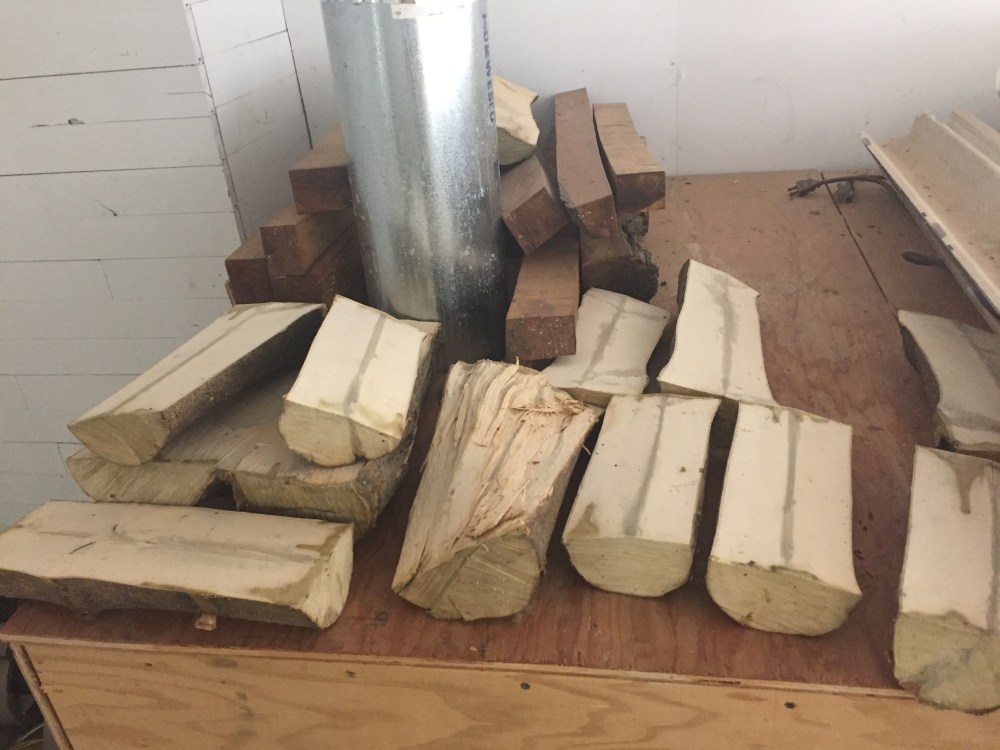
I’m afraid that I might be a wood hoarder.  I used to think that I merely had a wood storage problem, but now I think that it may have progressed to something larger.  My shop is becoming choked with offcuts, surplus, and bits of scrap that I’m sure to find a need for, …someday.

IMG_3195

The aggravating thing about this problem is that I often do find a need for a piece, and a piece for a need, thus justifying the existence of my growing collection.

It’s getting to the point where I’m hoping for a long cold winter that will tempt me to stoke the wood stove with some of it.

Maybe I can find a support group of similarly afflicted folks that I can share my pain with.

Cheers,
Tom

Dock Chairs, last of the season

Hey Folks,

Last summer, I finished four dock chairs too late in the season to sell them.  So they were stored away until summer rolled around this year, then they sold right away.  We’ve been traveling a lot this summer and once again, I’m only now getting around to finishing up another set.  These will likely be the last of the season as I have other projects waiting to get started that will take me into the autumn.

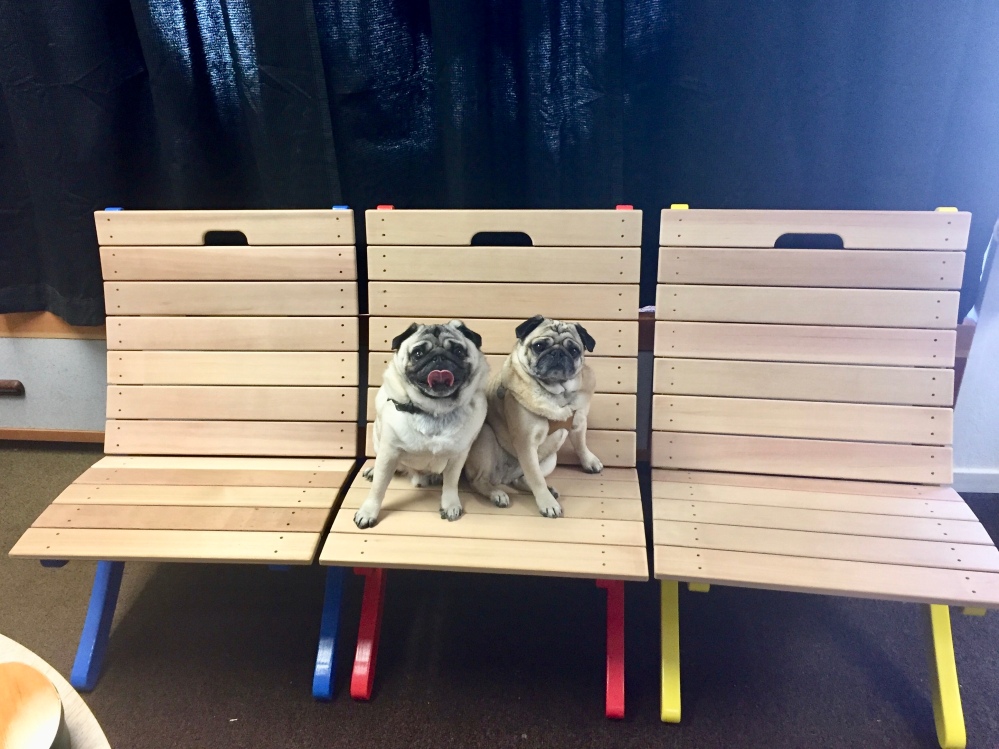
So, here we have Peggy Tzu and her friend, Pugsley modeling our latest dock chairs in Acapulco Blue, Fearless Red, and Sunshine Yellow.  In addition, I have one yellow and one red nearing completion.  After that, you’ll probably have to wait again until next year.  I say probably, because I have enough seat slats to make another chair, but no legs.  It turned out that I over estimated the yield I would get from the stock that I bought for the legs.  I was hoping to make six chairs and got five.  So if I end up with extra time later on, I might be induced to make a set of legs, but don’t count on it.fullsizeoutput_3e0

Cheers,
Tom

Get a Grip!

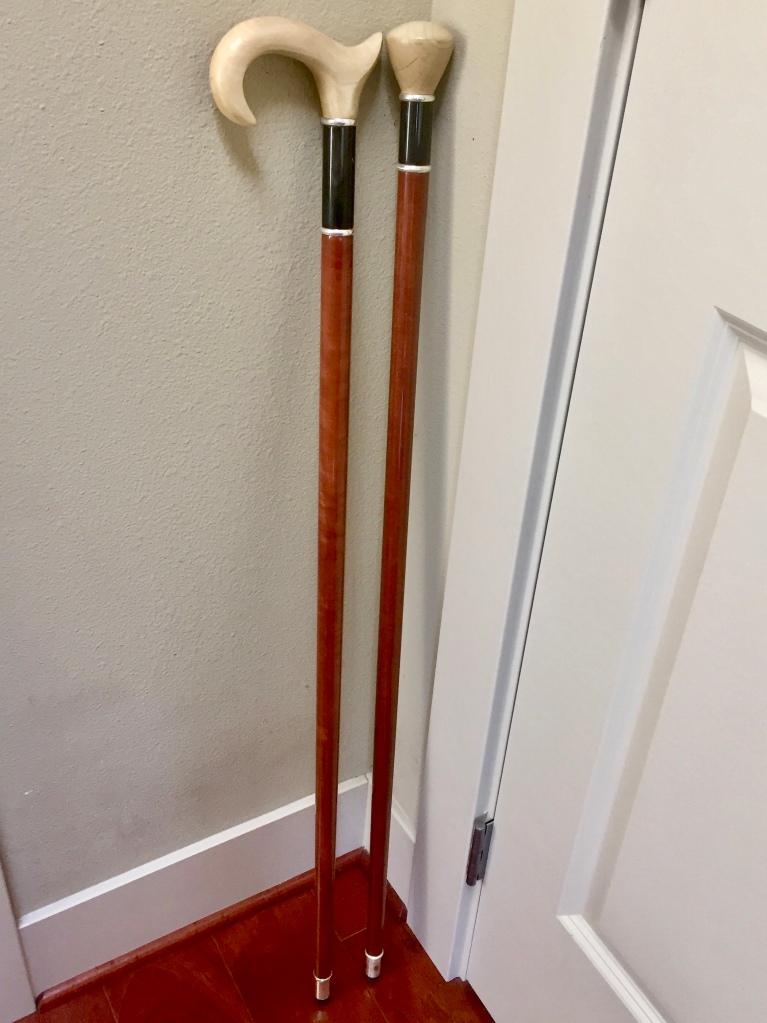
Who amongst us hasn’t heard that before?  Well, after posting about my recently finished  knob end walking stick, my friend Mitch commented that he prefers a crooked handled stick.

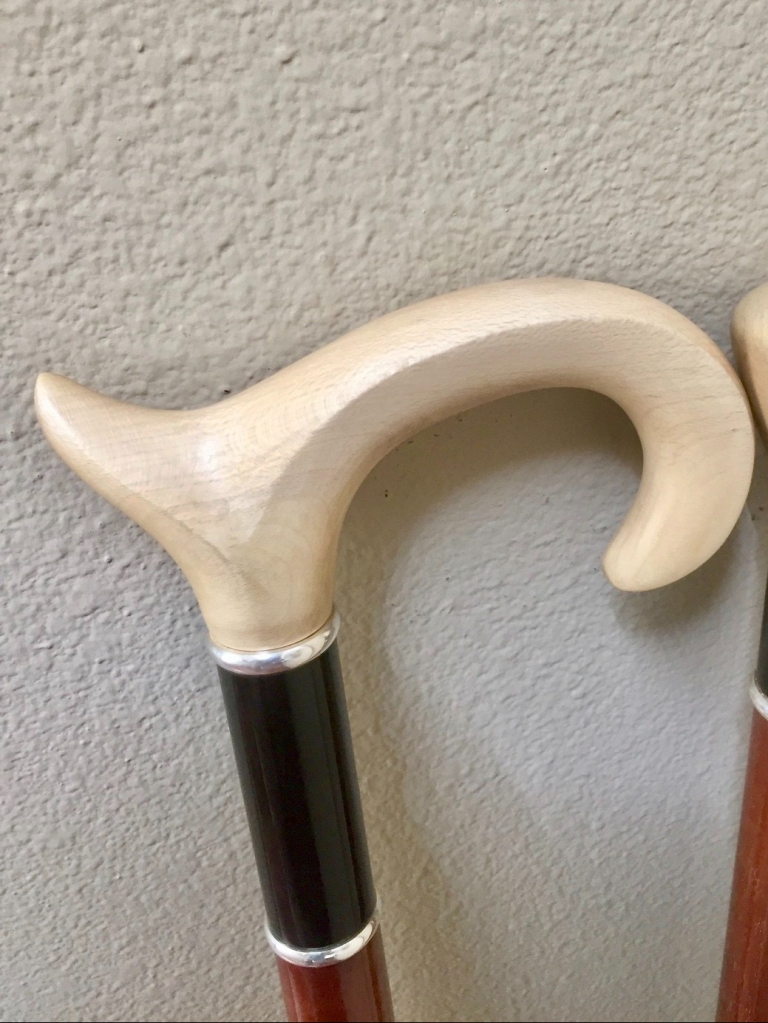
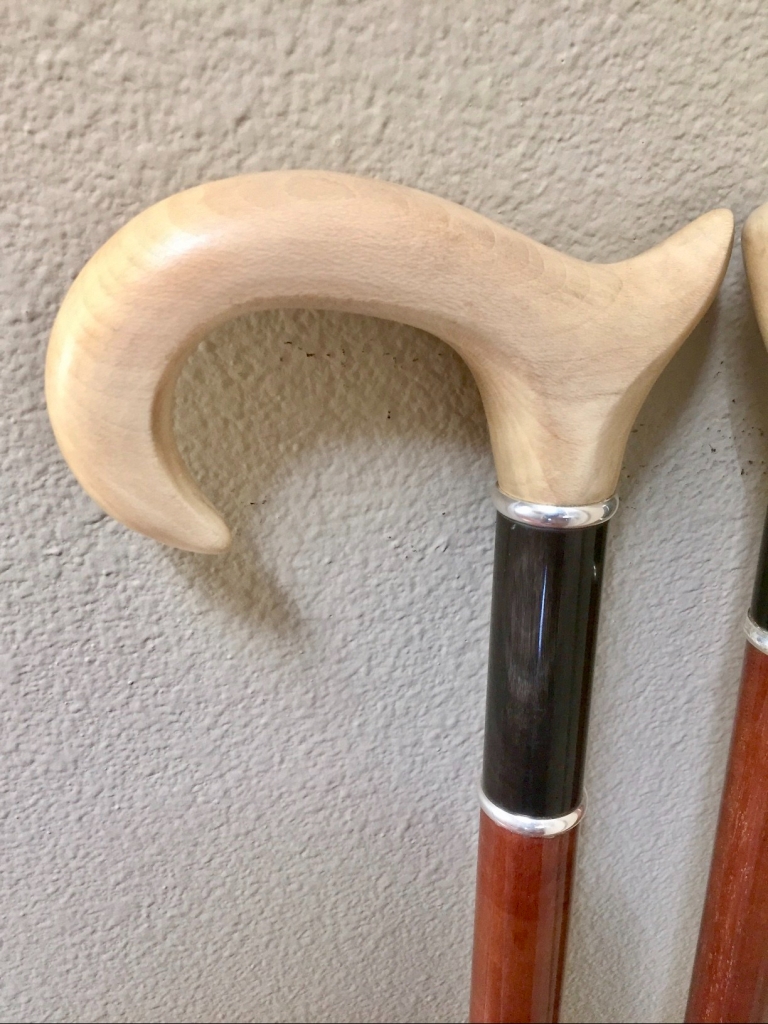
For everyday use, I have to agree that the crooked handle is very practical and convenient, if not very ergonomic to my hand, …enter the ergonomic “derby style” handle.

fullsizeoutput_3df

Like the previous knob end, this handle is also made of holly.  The characteristic features of the derby shape are the horn and the hook.  What makes it an ergonomic derby is the shaping of the handle to optimize the grip for specifically either the left or the right hand.  As I have a bum left knee, I chose to shape it for a right hand grip.

fullsizeoutput_3dc

As with the knob end stick, the parts are bubinga, water buffalo horn, holly and silver hardware.

fullsizeoutput_3dd

The catalogs claim that the ergonomic derby handle is as comfortable as a handshake.  Personally, I find that a rather dubious analogy as I have had some very awkward and painful handshakes in my time.  Although I am pleased with the appearance of the handle, I’m not sure that it’s exactly what I want yet.  The more I use it, the more critical of it I have become.  It curves up a bit too much, and it lacks heft toward the hook end so that it fails to fill my hand in a way that satisfies my arthritic fingers.

Fortunately, I had the rare foresight to install the handle using 5/16″ threaded steel “ready rod”, without glue.  So when I get fed up with it, I can unscrew it from the stick, sculpt a replacement, and start the process all over again.

Cheers,
Tom

I should have listened to my Ol’ Man…*

Pop once told me that the surest way to make an ass of yourself was to use “seat of the pants” engineering.  All puns aside he was usually right, and as a mechanical engineer he  generally considered all the angles (sorry) before proceeding.  Unfortunately, I decided to  wing it when building a steady rest for my lathe.

IMG_3014

When turning the walking stick, I had some problems with whip stocking.  Whip stocking is when the work piece starts translating (orbiting) instead of simply rotating.  It usually causes tool chattering and can easily ruin the work.  Using a steady rest keeps the piece in line and cutting smoothly.

So I decided to build a steady rest.  I grabbed up some leftovers I had laying around the shop and went to work.  Well, I had it more than half built before the wheels showed up in the post.  When assembled, the wheels are so large that the size range of adjustment is only about 2″. Duh

IMG_3015

For walking sticks, that’s fine, but I was hoping to build a more useful tool.  For now, I’ll leave it be, but I think that I might also build a larger ring to accommodate the other parts. I probably won’t make a drawing first though, … sorry Pop.

Cheers,
Tom

*Apologies to Sir Elton (Goodbye Yellow Brick Road).

A Rare Beauty in Bloom

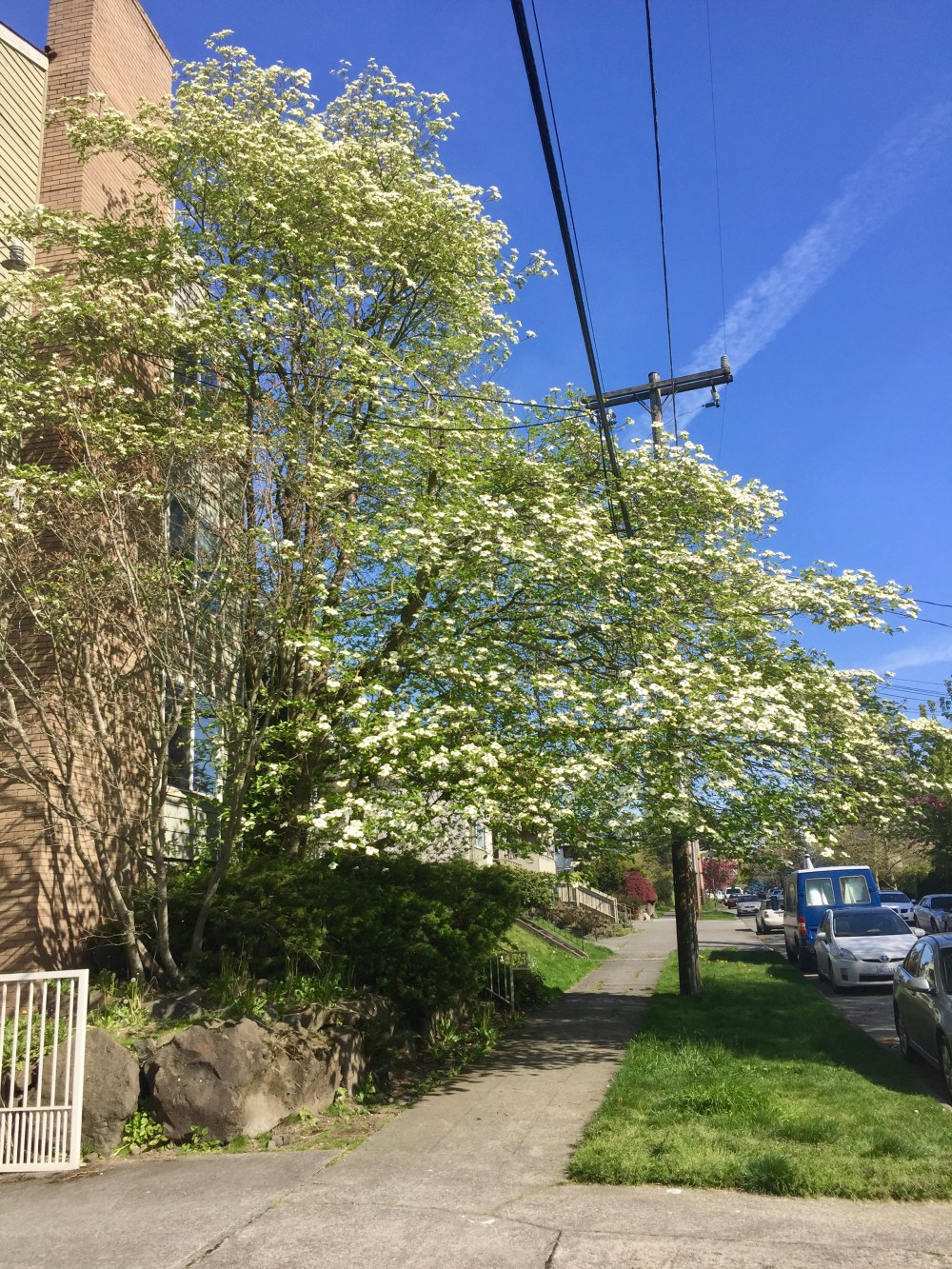
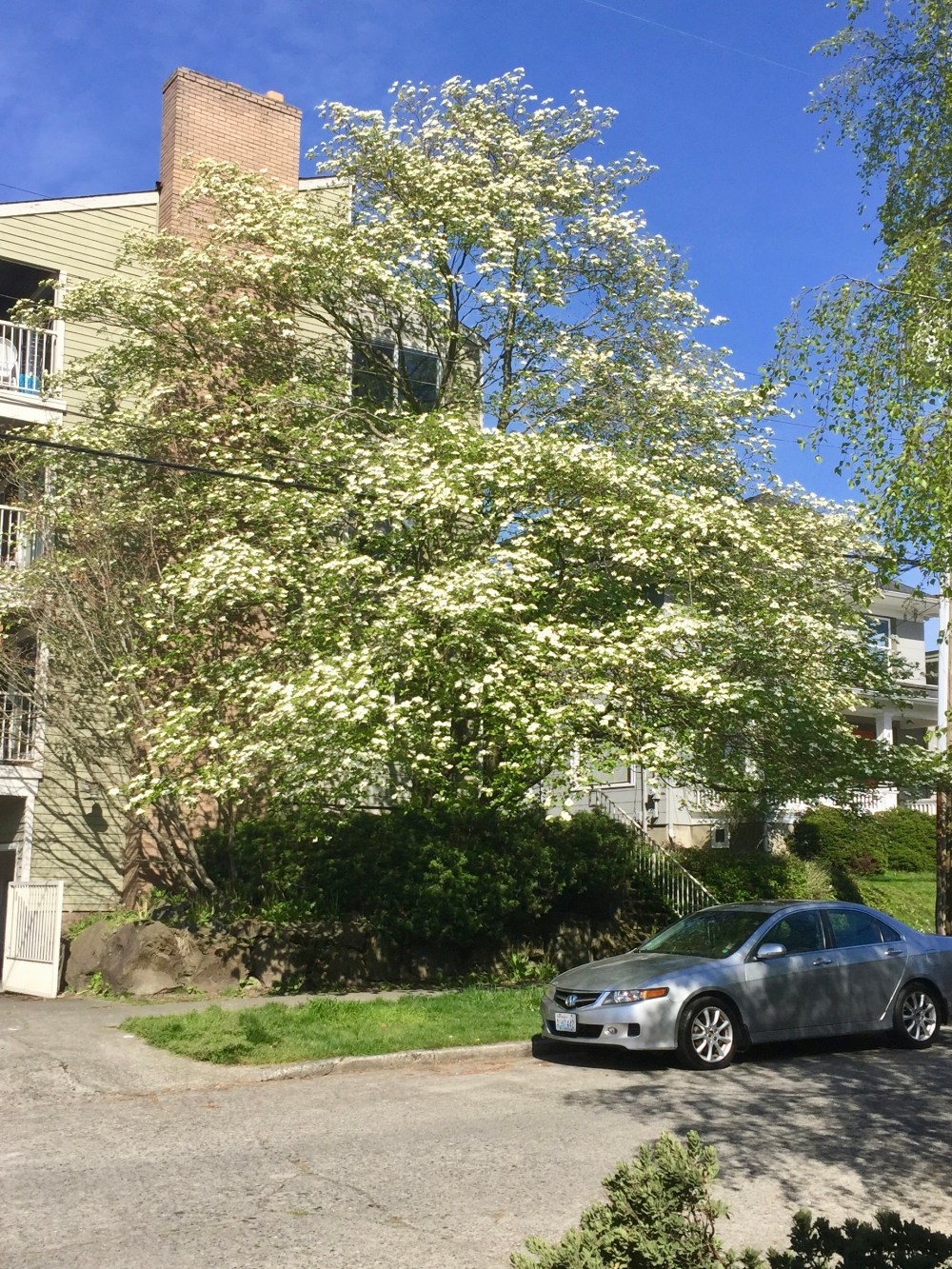
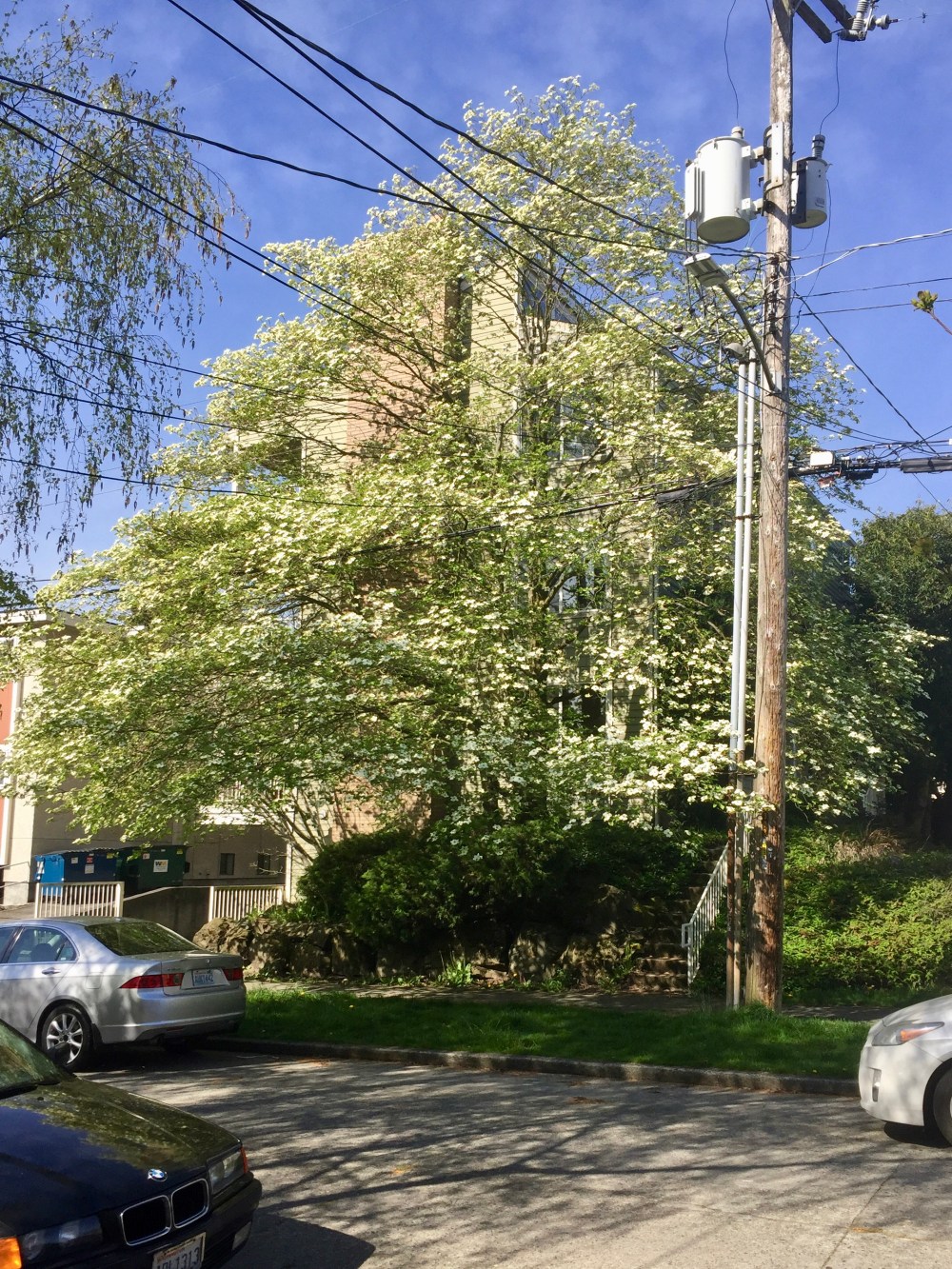
It’s Spring in Seattle and the dogwoods are in bloom.  The Pacific Dogwood (Cornus nutallii) is endemic to the west coast and is sadly threatened, in part, due to a fungal epidemic of Athracnose  (Discula sp.) .  Pacific Dogwood is an old growth understory plant* and like others of its type is also threatened by over harvest of old growth forests and modern logging practices.  The good news is that fungal resistant cultivars are being bred which will help reduce the spread of the disease.

fullsizeoutput_3d2fullsizeoutput_3d3fullsizeoutput_3d5

*Yes, this tree is over sixty feet tall but compared to a mature douglas fir or western red cedar that is an understory plant.

Cheers,
Tom